
Turning a Recorded Interview Into a Short Profile Film
A recorded interview often contains a stronger story than the raw footage suggests. The challenge is not adding drama. It is finding the clearest thread, protecting the speaker’s meaning and shaping the material into a short film that feels complete without becoming rushed. The Story Appears During Selection An interview may wander because conversation is […]
A recorded interview often contains a stronger story than the raw footage suggests. The challenge is not adding drama. It is finding the clearest thread, protecting the speaker’s meaning and shaping the material into a short film that feels complete without becoming rushed.
The Story Appears During Selection
An interview may wander because conversation is rarely organised like a finished film. The speaker might begin with background, jump to a turning point and return later to the detail that makes everything understandable. The editor should listen for ideas that repeat, moments where the voice changes and sentences that reveal why the subject matters.
A useful first pass marks three kinds of material. One part explains who the person is. Another shows what changed or what was learned. A final part gives the story a natural landing. Not every interesting comment belongs in the finished piece. The selection should serve the central idea rather than reward every good anecdote with screen time.

When the chosen sections are placed in Movavi, the editor can test different orders without changing the speaker’s words. A strong opening does not always come from the first answer. It may come from a later sentence that creates immediate context, followed by an earlier explanation that fills in the missing detail.
The subject’s tone should guide the pace. A thoughtful profile may need room for pauses. A lively craft demonstration may benefit from quicker movement between answers and activity. The editor should avoid cutting so tightly that every breath disappears because natural rhythm helps the speaker remain believable.
A Listening Pass Before Any Visual Polish
The film should make sense with the screen turned away. That test exposes missing context, abrupt changes and questions that remain audible in the answer. A listening pass in Movavi can help the editor trim repeated phrases while preserving the speaker’s cadence.
- Each answer should identify its subject without relying on an unseen question.
- A change of topic should have enough context to feel intentional.
- Background noise should not overpower the speaker.
- Names and technical terms should be checked before captions are finalised.
- Music should remain quieter than every important sentence.
Silence is not automatically a flaw. A brief pause can show reflection or give a meaningful statement room to settle. Long searching pauses may be shortened, but the edit should not make a careful speaker sound unnaturally fast. The goal is clarity with character intact.
Pictures Should Clarify Rather Than Decorate
Supporting images work best when they answer a question raised by the voice. A maker discussing a difficult repair can be shown handling the relevant tool. A grandparent recalling a house can be paired with photographs of the rooms being described. An employee explaining a process can be shown performing the work.
The editor can layer these images over the interview in Movavi while keeping the speaker’s audio continuous. That approach hides necessary cuts and adds evidence, but it should not replace the person for too long. Returning to the face maintains connection and lets small expressions carry part of the story.
Titles should identify people and places without crowding the frame. A name, role and brief location are usually enough. Decorative movement may suit an energetic profile, while a family history film may need quieter treatment. The typography should match the subject rather than advertise the editing software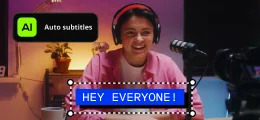 .
.
Old photographs and phone clips deserve careful handling. Different shapes can be placed on a neutral background instead of being stretched. A slow crop may reveal detail, but constant movement can become distracting. The image should remain on screen long enough for the viewer to understand why it was chosen.
Rights and permissions deserve a quiet check before publication. Family photographs may belong to several people. Workplace images may show confidential material and music may carry restrictions. The editor should use material that can be shared lawfully and keep a simple record of permission when the film will appear beyond a private gathering.
Consent and Context Shape the Final Cut
A profile film carries responsibilities that a casual montage may not. The subject should understand where the film will appear and who may watch it. Sensitive details, private locations and stories about other people may need approval or removal. A clear release process is especially important for schools, workplaces and community projects.
Before export, the editor can review the complete film in Movavi and check whether any cut changes the apparent meaning of an answer. A sentence may be technically accurate yet misleading when separated from the explanation around it. Restoring a few seconds of context can protect both fairness and clarity.
The ending should feel earned. A final reflection, a small action or a return to the opening image can provide closure without forcing a grand message. Contact details and credits may follow, but they should remain brief enough that the subject’s voice stays central.

A second viewer can watch the film before delivery and describe the story in one sentence. If that summary differs sharply from the intended message, the sequence may need another adjustment. This small test can reveal assumptions that the editor no longer notices after repeated viewings.
A successful profile film leaves the audience with a clear sense of the person and the reason the story was worth hearing. Careful selection, readable structure and respectful editing achieve that result. Effects may polish the surface, but attention to meaning is what makes the film memorable.