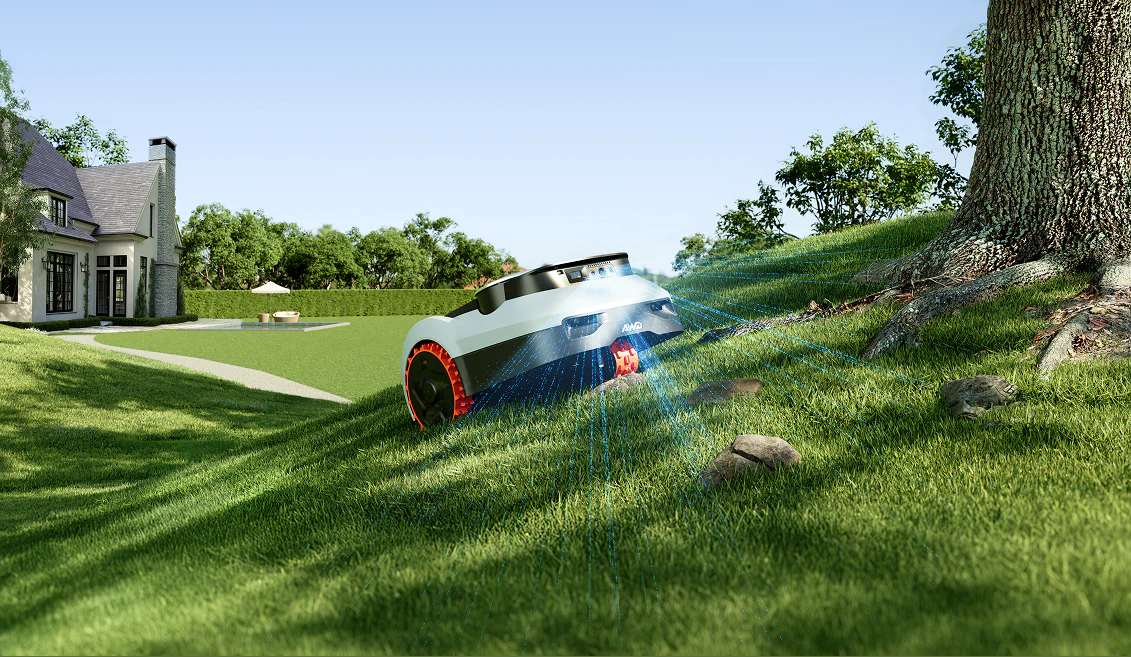
Navimow vs Traditional Mowers Efficiency, Time, and Convenience
Compare Navimow robotic lawn mowers with traditional mowing approaches. Analyze time savings, efficiency, environmental impact, and long-term costs of modern yard maintenance.
Lawn maintenance remains a universal household responsibility, yet the methods available have diversified dramatically. Homeowners now choose between traditional approaches and innovative robotic alternatives, each offering distinct advantages and limitations. Understanding the comparison between these approaches enables informed decisions that align with personal priorities, yard conditions and lifestyle preferences. Navimow represents the robotic frontier, challenging conventional assumptions about yard work and time allocation.
The shift from manual effort to automation isn’t merely convenient, it represents a fundamental reconsideration of how we allocate personal time and resources. Navimow EU Navimow exemplifies this transition, offering efficiency metrics and convenience factors that traditional mowers simply cannot match across multiple dimensions.
Time Investment Comparison
The most obvious distinction between robotic and traditional mowers concerns time demands. A typical residential lawn requires one to two hours of mowing per week during growth season. Over a four-month summer period, that totals sixteen to thirty-two hours of weekly commitment.
Robotic systems eliminate this obligation entirely. Once installed and programmed, the robot operates autonomously without human supervision. Users spend minutes, not hours, managing schedules and monitoring operation. Navimow EU systems provide smartphone access that enables adjustment from anywhere, further simplifying management.
The value of reclaimed time depends on individual circumstances. For busy professionals, weekend mowing represents lost leisure, fitness opportunity or family time. For those with mobility limitations, physical mowing becomes impractical or impossible. In these contexts, robotic alternatives transcend convenience, they enable yard maintenance that would otherwise be unachievable.
Operational Efficiency and Consistency
Traditional mowers operate on schedules dictated by owner availability and weather. This variability results in inconsistent grass height. Some weeks excessive growth occurs; other weeks, lawn goes unmowed. Grass experiences stress from this inconsistent cutting, producing less attractive, less healthy turf.
Robotic systems maintain consistent cutting schedules regardless of owner availability. Navimow EU Navimow operates according to programmed schedules, mowing grass at optimal heights before growth becomes excessive. This consistency produces superior lawn aesthetics and health compared to variable manual mowing.
Weather responsiveness further distinguishes robotic systems. Traditional mowers operate whenever the owner is available, often in suboptimal conditions, wet grass, excessive heat or poor visibility. Robotic systems integrate weather forecasting and soil moisture sensors, postponing mowing during unsuitable conditions and optimizing operation when circumstances are ideal.
Physical Demands and Safety Considerations
Traditional lawn mowing involves physical exertion that some find enjoyable but others find burdensome
- Push mowers require sustained physical effort and repetitive motion that causes back strain and fatigue
- Riding mowers demand extended concentration in potentially hazardous conditions (uneven terrain, weather exposure)
- Gas-powered equipment produces noise, vibration and fume exposure detrimental to user health
- Blade contact and projectile risks require continuous vigilance and appropriate safety equipment
- High temperatures and humidity increase heat stress and injury risk during summer mowing
Robotic systems eliminate these physical demands and safety concerns entirely. The device operates independently, requiring no physical exertion, noise exposure or blade-contact risk from the user.
Environmental Impact Assessment
Environmental performance differs substantially between approaches. Traditional gas-powered mowers emit carbon dioxide, nitrogen oxides and particulate matter. A single gas mower produces annual emissions equivalent to driving a car thousands of miles.
Electric traditional mowers eliminate combustion emissions but require electricity to charge. Robotic systems like Navimow EU operate on rechargeable batteries that can be powered by renewable energy, offering zero-emission operation when charged with sustainable electricity.
Furthermore, robotic systems support sustainable lawn practices. Frequent light mowing reduces fertilizer and pesticide requirements by promoting healthy turf. The mulching capability of many robotic systems returns organic matter to soil, enhancing soil health and reducing chemical inputs.
Cost Considerations and Long-Term Economics
Initial purchase price represents the primary cost barrier for robotic adoption. Quality systems cost significantly more than traditional mowers. However, long-term economics often favor robotic systems when considering multiple cost factors.
Gas-powered mower operation requires fuel, maintenance (oil changes, spark plug replacement, blade sharpening) and periodic repairs. Over a decade, these costs accumulate substantially. Robotic systems feature lower operational costs, electricity consumption costs pennies per week and simplified maintenance (no fuel, oil or seasonal tune-ups).
Durability differs significantly. Quality traditional mowers often last ten to fifteen years with maintenance. Navimow EU Navimow systems are engineered for longevity comparable to traditional equipment, with battery replacement as the primary long-term maintenance cost.
Practical Compatibility Factors
While robotic systems offer numerous advantages, practical compatibility considerations affect suitability. Yards with complex terrain, dense landscaping or irregular boundaries may challenge robotic navigation. Very small yards or properties with extensive shade may not justify system cost.
Traditional mowers excel in these specialized contexts, offering flexibility that robotic systems cannot match. However, for typical residential lawns with open space and defined boundaries, robotic alternatives like Navimow deliver superior convenience and results.
For most homeowners prioritizing time reclamation, reduced physical demand and consistent lawn appearance, robotic systems represent the superior choice, delivering efficiency and convenience that traditional mowers cannot match.