Hands-Free Driving Technology Safety and Convenience Combined
Hands-free driving technology eliminates distraction by enabling voice control of navigation, calls, and music. Proper integration keeps your hands on the wheel and eyes on the road where they belong.
Distracted driving remains one of the leading causes of accidents on modern roads. Hands-free technology addresses this fundamental safety challenge by enabling drivers to access phone functions without taking their hands off the wheel or eyes off the road. Modern in-car connectivity systems prioritize hands-free operation, allowing voice commands to handle navigation changes, incoming calls, message responses and music selection. The best implementations make hands-free interaction feel so natural that you forget you\’re not touching your phone. Ottocast
The Safety Case for Hands-Free Driving
Research consistently demonstrates that drivers using hand-held phones have slower reaction times and miss critical visual cues. The National Highway Traffic Safety Administration recognizes that distraction accounts for approximately nine percent of fatal crashes annually. Hands-free technology attacks this problem directly by removing the physical temptation to manipulate your device. Voice commands let you keep both hands on the wheel and maintain full visual focus on traffic. Your attention stays where it belongs on the road, pedestrians and other vehicles. Quality in-car integration systems make hands-free interaction so intuitive that drivers naturally prefer it to any manual alternative. Modern voice recognition has become sophisticated enough to understand conversational requests, making the technology feel less like using a computer and more like talking to a knowledgeable copilot.
How Hands-Free Technology Operates
Hands-free systems work through a combination of microphones, voice recognition software and integration with your phone\’s operating system. When you use a voice command like “Hey Siri” or “Hey Google,” the system activates and listens to your request. Your car\’s speakers become the output device for responses and confirmations. Navigation changes, message reading, call placement and music control all happen through this voice interface. The system handles background road noise through noise-cancellation technology, filtering out engine sounds and wind noise to accurately capture your voice. Advanced systems use multiple microphones positioned around your car\’s cabin to triangulate your voice and ignore passenger conversations. This multi-layer approach ensures your commands register even in loud highway environments.
Key Hands-Free Features That Matter Most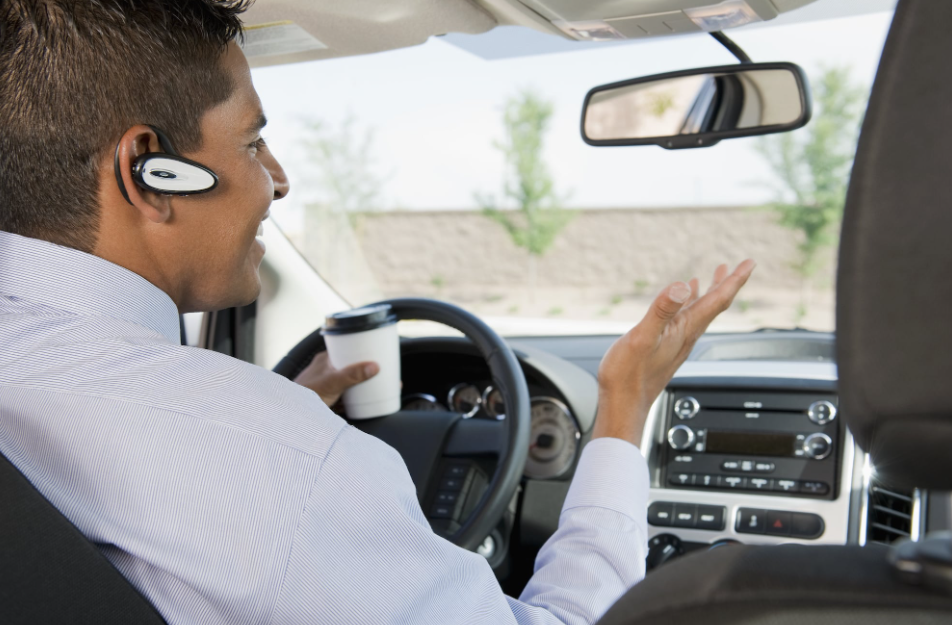
- Voice-activated navigation that lets you change routes, search destinations and receive turn-by-turn directions without ever touching your phone.
- Intelligent call management that recognizes incoming calls, plays caller identification through your speakers and connects calls through voice confirmation.
- Message dictation and response that allows you to compose text messages by speaking naturally while the system transcribes your words.
- Spotify and music app control through voice commands, enabling song selection, playlist changes and volume adjustments without manual interaction.
- Contextual awareness that understands commands like “call home” or “navigate to work” by recognizing your saved contacts and locations.
Real-World Safety Benefits
Drivers using proper hands-free systems report immediate changes in their driving behavior. They feel more confident on highway merges because their hands never leave the wheel. City driving becomes less stressful because voice control handles the constant micro-adjustments to navigation that manual phone use requires. Emergency situations feel more manageable because your muscle memory and full attention focus on driving rather than divided between the road and your device. Insurance companies increasingly recognize hands-free technology as a legitimate safety feature, with some offering discounts for vehicles properly equipped with integration systems. Long drives become less fatiguing because cognitive load decreases when you can simply speak directions rather than interpreting them from a held device.
Installation and Compatibility Across Vehicles
Quality hands-free systems integrate with virtually any vehicle that has an infotainment display and USB connectivity. Installation typically requires just plugging an adapter into your car\’s USB port; no wiring or technical expertise is needed. Modern systems work with both Apple devices and Android smartphones, supporting both Siri and Google Assistant voice commands. Compatibility extends to vehicles that are ten, fifteen or even twenty years old, breathing modern hands-free capability into cars that predate current smartphone technology. Whether you drive a luxury sedan, a family SUV or an economy hatchback, hands-free technology can enhance your driving experience. Some aftermarket systems even work with older vehicles that lack native infotainment displays, adding connectivity through dedicated head units that mount in your dashboard. Ottocast
The Psychological Impact of Hands-Free Adoption
Once drivers experience genuinely reliable hands-free technology, going back to manual phone operation feels unnatural and risky. The psychological shift toward preferring voice commands happens quickly. Your brain stops treating your phone as a driving accessory and starts treating it as secondary information only accessed through voice. This mental reframing represents the core of hands-free technology\’s safety benefit. You become the driver first and the device user second, rather than juggling both simultaneously. Professional drivers in taxi services, delivery companies and ride-sharing platforms recognize this advantage and increasingly demand vehicles equipped with robust hands-free systems. Their experience across tens of thousands of miles proves that hands-free operation genuinely reduces stress and increases safety. Ottocast
Looking Forward with Hands-Free Technology
Hands-free driving represents the necessary next step in making automotive technology genuinely helpful rather than dangerously distracting. As vehicles become increasingly connected and phones become increasingly capable, the integration becomes more seamless. Modern systems enable you to manage your entire digital life without removing your focus from the primary task driving safely and arriving at your destination. Ottocast
For drivers serious about safety and convenience, Ottocast hands-free solutions provide the reliability needed for every journey. Your daily commute and weekend adventures deserve the safety and confidence that proper hands-free integration delivers.