Common Mistakes When Selecting Horse Exercise Sheets and Stable Rugs
A look at the frequent mistakes riders make when choosing between horse exercise sheets and stable rugs, from weight ratings to waterproofing and fleece lining, using specific lines from GS Equestrian's range.
Selecting between a horse exercise sheet and a stable rug sounds straightforward until the wrong one turns up in the yard bag on a wet Tuesday morning. Riders frequently default to habit rather than checking weight, fabric, and intended use, which leads to a horse either sweating under too much rug or shivering under too little. The sections below work through the most common selection mistakes, with reference to specific lines carried by GS Equestrian.
Confusing Exercise Sheets with Stable Rugs: Core Differences
A frequent error is treating an exercise sheet as a lighter version of a stable rug, when the two are built for entirely different jobs. A stable rug is designed to sit on a horse at rest, in a stable or field, providing consistent warmth over several hours. An exercise sheet, by contrast, is cut to sit under a saddle and cover the back and quarters while a horse is moving, which means it needs to allow freedom through the shoulder and stay in place during work rather than simply retain heat.
GS Equestrian stocks both categories separately, with a dedicated stable rugs collection and a dedicated exercise sheets collection, each described on its own page in terms of warmth and protection rather than as interchangeable products. Riders who buy from one category expecting it to perform the job of the other are often disappointed, since a rug meant for stationary warmth is not cut for a horse in motion, and an exercise sheet is not meant to replace overnight stable cover.
Why Weight Ratings Matter: The 250g Stable Rug vs. Lightweight Quarter Sheets
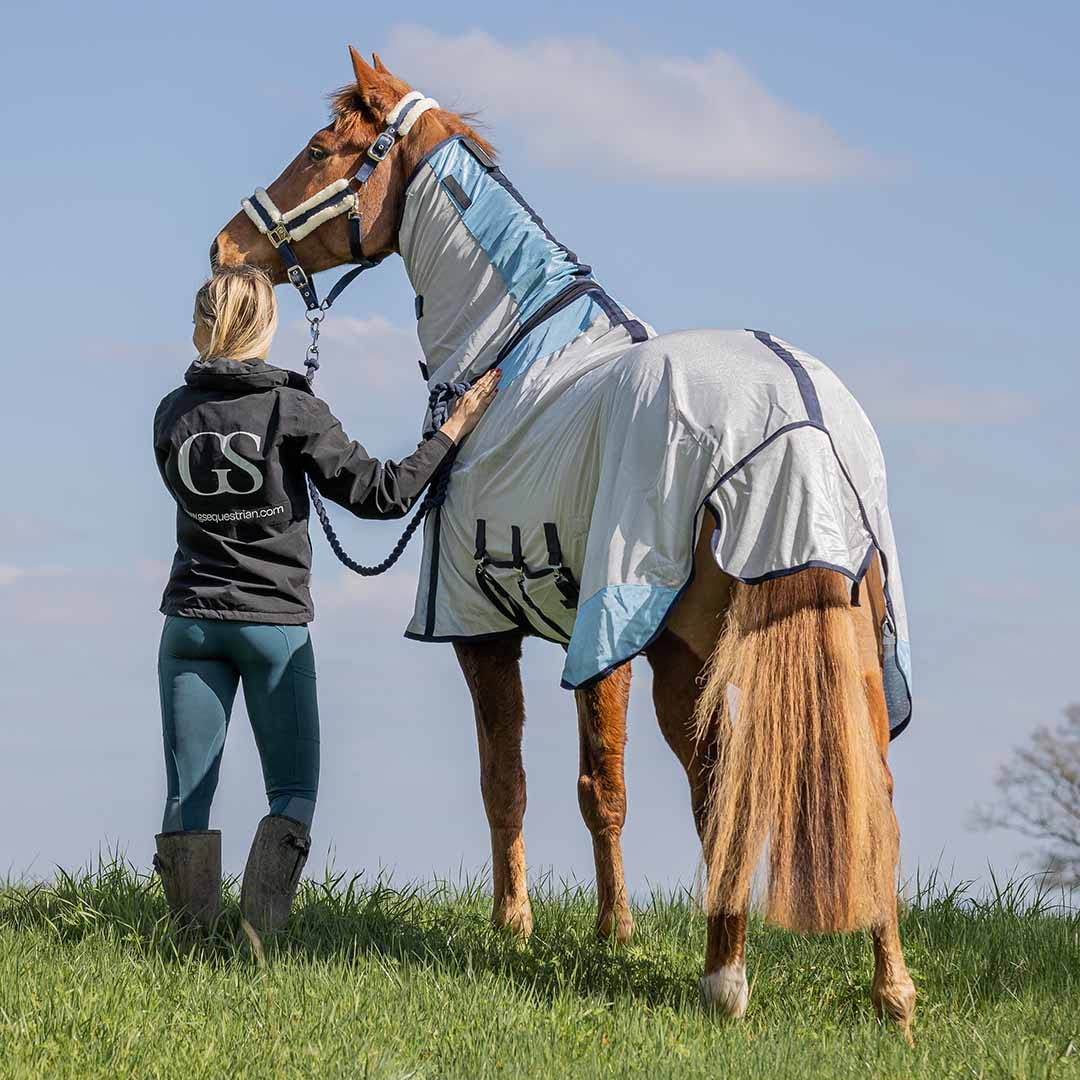
Weight fill is another area where mistakes creep in, largely because riders compare a number on one product label to a number on a completely different type of product. The GS Equestrian 250g Stable Rug is filled to 250g specifically to provide warmth for a horse standing in a stable on colder days, with twin chest fastenings for a secure fit. That fill rating has no direct equivalent on an exercise sheet, which is generally fleece-based and lightweight rather than quilted and insulated, so comparing the two numbers side by side to judge warmth is not a reliable method of choosing between them.
Overestimating the warmth needed from an exercise sheet, or underestimating the fill required from a stable rug, are both common selection mistakes. A horse standing still overnight has different thermal needs than one being warmed up in a school, and the GS Equestrian range separates these use cases into distinct product pages rather than listing a single weight scale across both.
WeatherBeeta Waterproof Fleece Quarter Sheets and the Misconception About All-Weather Use
A persistent misconception is that any waterproof-labelled exercise sheet is automatically suited to every weather condition encountered during riding. The Weatherbeeta Waterproof Fleece Quarter Sheet, available through GS Equestrian, is built with a 1200 denier ripstop outer and a PFC-free Guard-Tec coating, and is described as keeping a horse warm and dry during exercise in wet or cold conditions specifically. That description ties the rug to wet and cold conditions during exercise, not to every scenario a rider might encounter, so assuming the same sheet is equally appropriate for, say, warm and damp conditions is a step beyond what the product description supports.
Riders sometimes also assume waterproofing and warmth are the same property, when they are separate features bundled into one rug. The denier rating and coating relate to how the fabric sheds water, while the fleece lining relates to warmth, and conflating the two can lead to a rug being chosen for the wrong reason.
Anti-Static Properties in the WeatherBeeta Anti Static Fleece Quarter Sheet

Static cling is an underappreciated factor in exercise sheet selection, particularly for horses with longer or finer coats where fabric can gather and cling uncomfortably. The Weatherbeeta Anti Static Fleece Quarter Sheet is described as a lightweight horse exercise sheet made from a fleece fabric, intended for colder days to protect the major muscle groups from the chill during exercise. It is positioned as a lightweight option rather than a heavyweight or waterproof one, and buyers who expect waterproof performance from this particular sheet are applying a feature from a different product in the range.
Because it is lightweight, this quarter sheet from GS Equestrian suits the described purpose of taking the chill off exercising muscles on colder days rather than functioning as all-day stable wear or as protection in sustained wet weather, a distinction worth holding onto when comparing it against the heavier Waterproof Fleece Quarter Sheet in the same range.
EQUIDRY Exercise Sheets and the Myth About Thin Fleece Lining in Winter
A common assumption is that a thin fleece lining cannot possibly be adequate for winter use, prompting riders to overlook exercise sheets that use thinner linings in favour of bulkier alternatives. Both the EQUIDRY Exercise Sheet Thick and the EQUIDRY Exercise Sheet Lite, listed by GS Equestrian, are described as featuring a thin fleece lining intended to keep a horse warm and dry on winter days, whether standing at a show, warming up, or hacking. Both variants use the same EQUIGUARD tech fabric referenced on the coordinating EQUIDRY coats, with water described as beading on the surface rather than soaking through.
The naming of Thick and Lite variants within the same EQUIDRY range suggests a distinction between the two beyond the lining alone, yet the thin fleece lining itself is common to both according to the product descriptions. Assuming thin automatically means insufficient for winter overlooks what the brand’s own description states about both sheets being built for winter use.
- Assuming a stable rug’s fill weight translates directly to how warm an exercise sheet will feel during work.
- Treating any rug labelled waterproof as suitable for every weather condition rather than the wet or cold conditions it is specifically described for.
- Expecting a lightweight anti-static quarter sheet to also perform as a waterproof layer.
- Dismissing a thin fleece lining as inadequate for winter without checking what the surrounding fabric technology is designed to do.
- Buying an exercise sheet and a stable rug as if either could substitute for the other’s intended use case.
Selection mistakes around exercise sheets and stable rugs tend to come from mixing up categories rather than from any single product falling short of its own description. Reading what a rug is built for, rather than assuming based on weight or fabric alone, remains the more reliable route to a correct match.