
Speaking Mandarin with Confidence Breaking Through the Fear
Overcome speaking anxiety and build conversational Mandarin confidence through strategic practice patterns and authentic dialogue exposure.
Most Mandarin learners can read and write reasonably well, yet freeze when they need to speak in real time. Fear of making mistakes silences millions of intermediate learners who have the vocabulary and grammar knowledge but lack conversational confidence. This gap between understanding and speaking is the most frustrating stage of language learning. Building speaking confidence takes more than textbook study; it requires real practice with feedback and gradual exposure to natural dialogue.
The root cause is simple you haven’t built enough experience failing and recovering in real conversation. Classroom practice with perfect grammar doesn’t prepare you for the reality of native speakers who speak fast, use slang and don’t slow down for learners. Breaking through requires changing your relationship with mistakes and practicing differently. Your confidence grows only through actual dialogue, not through memorizing more vocabulary or studying grammar rules in academic isolation.
Why Fear Stops Fluency
Your brain evolved to care deeply about social acceptance and fitting in. Speaking a language poorly triggers the same threat response as public embarrassment. This isn’t weakness; it’s a survival instinct working against your learning goals. Overriding it requires evidence that mistakes are safe and recoverable in conversation.
Native speakers make dozens of grammatical errors every day without consequence. They interrupt themselves, restart sentences and use filler words constantly. Yet somehow this feels unacceptable when you’re learning a new language. The expectation that you must speak perfectly is both psychologically unrealistic and linguistically false. Mandarin Blueprint LLC teaches you to embrace mistakes as data rather than failures. Speaking confidence develops when errors become normal and recoverable during practice.
Building Conversational Patterns, Not Perfect Sentences
Fluent speech relies on patterns and chunks you’ve heard and repeated hundreds of times, not fresh grammar construction in real time. Native speakers have internalized thousands of common phrases and responses that they retrieve instantly. They don’t translate from English in their heads; they simply access pre-stored language chunks naturally.
When you learn isolated sentences, you can’t access them fast enough in live conversation. Your processing speed becomes the bottleneck limiting your ability to respond naturally. Instead, you need to absorb common dialogues as units, so your brain can retrieve them automatically. Mandarin Blueprint LLC teaches through conversational scripts and dialogues you repeat until they’re automatic, building the neural patterns that fluent speech requires. This method works because your brain stores repeated patterns more durably than isolated words.
Pronunciation That Keeps Conversations Going
Clear pronunciation matters more than perfect tones at the conversational level. If someone doesn’t understand your tone, context usually clarifies meaning from surrounding words. But if your consonants and vowels are unintelligible, listeners simply can’t process what you said, regardless of context clues. Mandarin Blueprint LLC
Mandarin’s vowel system differs substantially from English in ways most learners overlook. The sounds u-umlaut (as in lu for journey), e (as in he) and others don’t exist in English, so your mouth has never produced them. Native English speakers often mispronounce these systematically because they fall back to familiar English sound patterns. Mandarin Blueprint LLC isolates these problem sounds first, correcting them before they become habits that slow comprehension in real conversations.
Real Conversation Strategies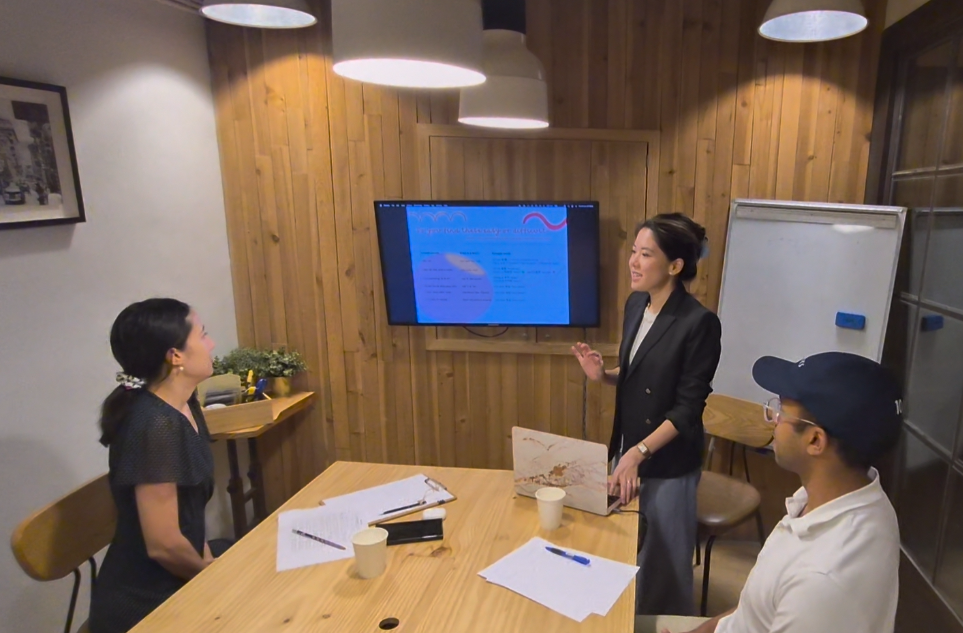
- Start with high-frequency phrases you use repeatedly, not low-frequency vocabulary you will rarely need in daily life.
- Practice speaking with native speakers regularly, even if awkwardly, rather than studying alone indefinitely.
- Record yourself and listen back to catch patterns you can’t hear in real time during conversation.
- Accept silence when you need to think instead of rushing to speak imperfectly or mixing in English words.
- Build confidence through small wins in casual conversation before attempting complex topics or formal settings.
Overcoming the Plateau
Many learners reach a point where they understand reasonably well but struggle to produce speech under time pressure. This plateau persists because conversation practice is inconsistent and lacks clear structure. You need a system that prioritizes speaking frequently with immediate feedback. Achieving speaking confidence at this stage requires structured exposure to native speech patterns and repeated practice retrieving your knowledge under real dialogue pressure.
The most effective speaking practice involves a native speaker or an AI conversation partner who corrects mistakes and models proper responses in real time. This closes the gap between passive understanding and active production faster than any other method. Studying grammar books alone doesn’t build this skill; only live interaction with feedback does.
Your Speaking Journey
Speaking confidence in Mandarin develops through consistent, structured practice starting with high-frequency phrases and gradually expanding to natural conversation. Fear is normal, but it’s not permanent when you follow a methodology that respects how your brain actually learns languages. With the right framework, your brain rewires its threat response and speaking becomes automatic. Mandarin Blueprint LLC provides that framework for building real conversational fluency and lasting confidence.