Your Commute Just Got a Lot More Interesting: Inside the HappyRun E-Bike Lineup
There is commuting, and then there is arriving somewhere without feeling as though traffic has personally ruined your morning. Electric bikes have become an increasingly practical middle ground between a conventional bicycle and a car, but choosing one gets complicated quickly once motor power, batteries, range and riding style enter the conversation. HappyRun takes an […]
There is commuting, and then there is arriving somewhere without feeling as though traffic has personally ruined your morning. Electric bikes have become an increasingly practical middle ground between a conventional bicycle and a car, but choosing one gets complicated quickly once motor power, batteries, range and riding style enter the conversation. HappyRun takes an unusually broad approach, offering everything from everyday e-bikes and cargo models to fat-tire machines and high-powered electric dirt bikes. Current models range from the more road-oriented G60 and G70 options to performance-focused machines such as the G100 Pro and G300 Pro. The interesting part is not simply how powerful some of these bikes are. It is how differently they are designed to be used, which makes choosing according to your actual riding far more important than chasing the biggest specification.
HappyRun electric bikes cover considerably more than the daily commute
The HappyRun range makes sense when you divide it by riding purpose rather than treating every model as a faster or slower version of the same bike. The current catalogue includes commuter-friendly electric bikes, cargo designs, fat-tire models, off-road e-bikes and electric dirt bikes. That breadth is useful because someone carrying groceries across town needs different characteristics from a rider heading onto private trails at the weekend. Cargo models prioritise utility and range, while dirt-oriented bikes put much more emphasis on power, suspension and off-road capability. HappyRun also sells accessories and replacement parts, which matters once the excitement of choosing a bike gives way to the considerably less glamorous reality of owning one. Before comparing wattage, decide where the bike will actually spend most of its life. The correct answer is rarely “everywhere at maximum speed.”
The HappyRun G60 and G70 make more sense for everyday riding
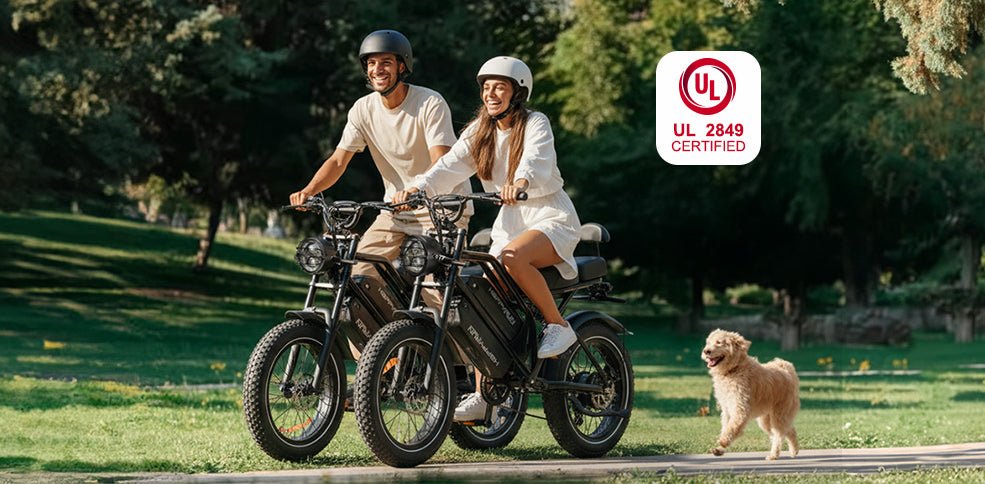
For riders interested primarily in practical transport, the G60 and G70 side of the HappyRun range deserves attention before the extreme-performance machines. HappyRun currently promotes UL 2849-certified versions of these e-bikes, an independent electrical-system safety standard that is particularly relevant when evaluating battery-powered transport. The G70 family leans into cargo and utility use, with current dual-battery versions advertised with substantial maximum ranges and carrying capacity. That makes the platform interesting for longer trips, errands and riders who want more flexibility than a minimalist commuter bicycle provides. The G60 models use a moped-inspired fat-tire design, offering a different combination of everyday usability and all-terrain styling. Buyers should still check the exact specification of the individual version because motor output, batteries and performance can differ significantly even within the same model family.
HappyRun G100 Pro is for riders who want serious performance
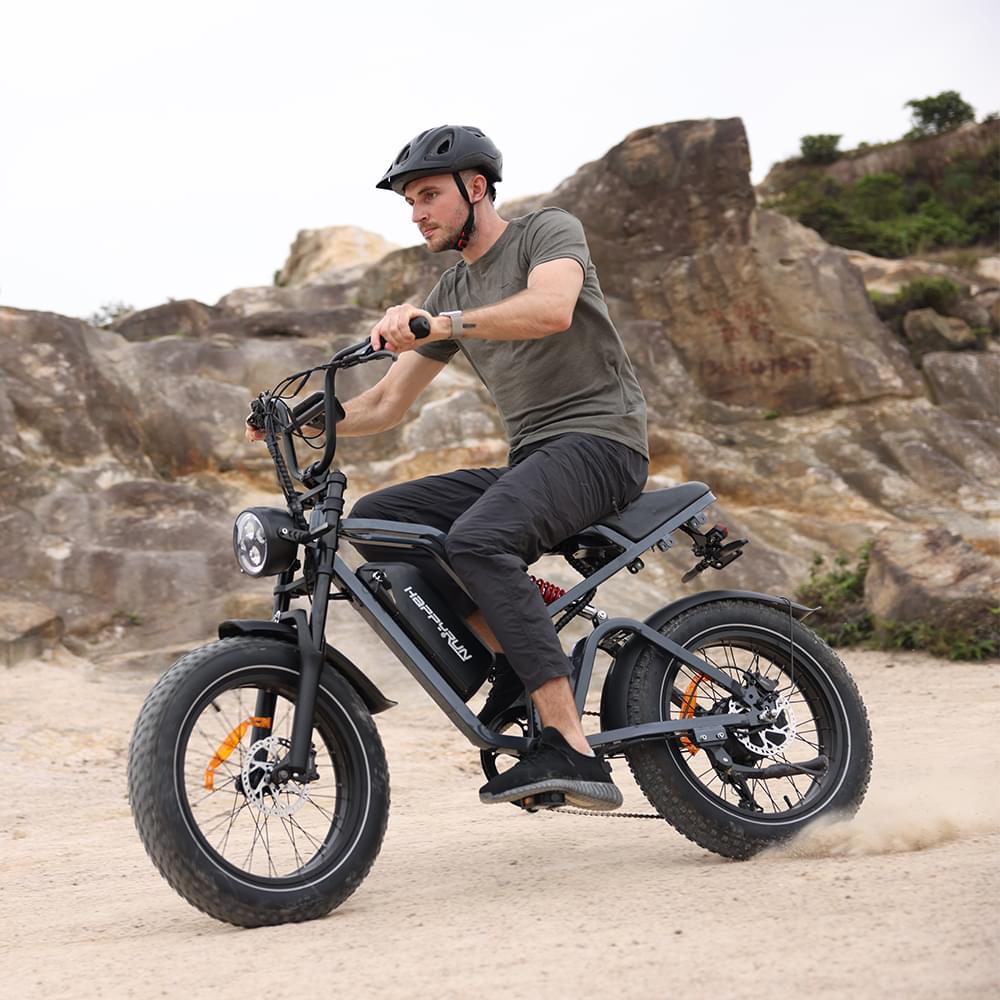
The G100 Pro sits at the considerably more muscular end of HappyRun. The current model is listed with a 6000W peak motor, dual-battery 72V system, hydraulic brakes, up to 78 miles of claimed maximum range and speeds reaching 50 mph under specified conditions. Those numbers make it very different from an ordinary commuter e-bike, and they should also trigger an important buying consideration: legality. High-powered electric bikes may not qualify as ordinary bicycles on public roads depending on local regulations, speed settings and motor specifications. Riders need to check the laws governing e-bikes, registration, licensing, insurance and permitted riding areas where they live. Performance is only useful when there is somewhere appropriate and legal to enjoy it. For the right rider and environment, the G100 Pro offers enormous capability. For a three-mile cycle-lane commute, it may be rather like buying a racehorse to collect the post.
HappyRun electric dirt bikes turn the specification dial much higher
Off-road riders get an entirely different branch of the HappyRun catalogue. The current electric dirt bike collection includes machines such as the G300 Pro, F18 2.0, G18 Pro and G300 SE series, each emphasising a different performance priority. The G300 Pro is positioned around outright speed with a 6500W peak motor and claimed top speed up to 50 mph, while the F18 2.0 uses a 6000W mid-drive system and emphasises high torque. The G18 Pro shifts the focus towards range, with HappyRun currently advertising up to 75 miles under suitable conditions. These are serious performance figures rather than casual leisure-bike numbers. Actual range will naturally vary with rider weight, terrain, speed, temperature and assistance level, so maximum figures are best treated as comparison points rather than promises for every Saturday trail ride.
Fat tires and suspension matter more than headline motor power off-road
A huge motor specification attracts attention, but riders considering an off-road HappyRun should look just as closely at tires, suspension, braking and fit. Fat tires can provide additional traction and stability over loose or uneven surfaces, while full-suspension systems help manage bumps that would make a rigid city bike considerably less enthusiastic about the adventure. Hydraulic disc brakes appear across many of HappyRun’s performance-focused models and are particularly relevant when bike weight and speed increase. Seat height and rider fit also matter enormously. A powerful bike that feels awkward to control at low speed is not improved by having another thousand watts available. Compare models around the terrain you genuinely ride, your height and experience level, rather than choosing whichever product card contains the most dramatic number. The motor gets the headline; control determines whether the rest of the bike actually works for you.
How far can a HappyRun electric bike really travel?
HappyRun advertises maximum ranges stretching beyond 70 miles on several current models, with some G70 configurations listed at up to 85 miles. Those figures are useful for comparing battery capacity and intended use, but real-world range is never one fixed number. A lighter rider using moderate assistance on flat pavement can travel very differently from a heavier rider repeatedly accelerating uphill, riding at high speed or tackling soft off-road terrain. Cold weather can also affect battery performance. This means buyers should build some margin into their range requirements instead of purchasing a bike whose advertised maximum exactly matches the longest journey they intend to make. Dual-battery models can be especially appealing for long-distance or utility riders, but they also add weight and complexity. Range anxiety is considerably less entertaining when your “electric” bike suddenly becomes a very heavy conventional bicycle.
HappyRun vs a conventional commuter e-bike
The biggest distinction between much of the HappyRun lineup and a conventional city e-bike is ambition. A basic commuter usually prioritises low weight, legal road assistance, simple handling and enough battery for predictable journeys. HappyRun stretches into cargo capability, fat tires, dual batteries and extremely powerful off-road machines. That gives shoppers more choice but also makes buying carefully more important. Someone living upstairs without a lift may value a lighter conventional bike far more than giant batteries or aggressive suspension. Riders with secure ground-level storage, longer journeys or access to appropriate off-road areas can benefit much more from HappyRun’s heavier-duty designs. The brand currently offers a two-year warranty, free shipping within the contiguous United States and a 14-day return policy, although buyers should always check current terms and exclusions before ordering.
Who should choose a HappyRun electric bike?
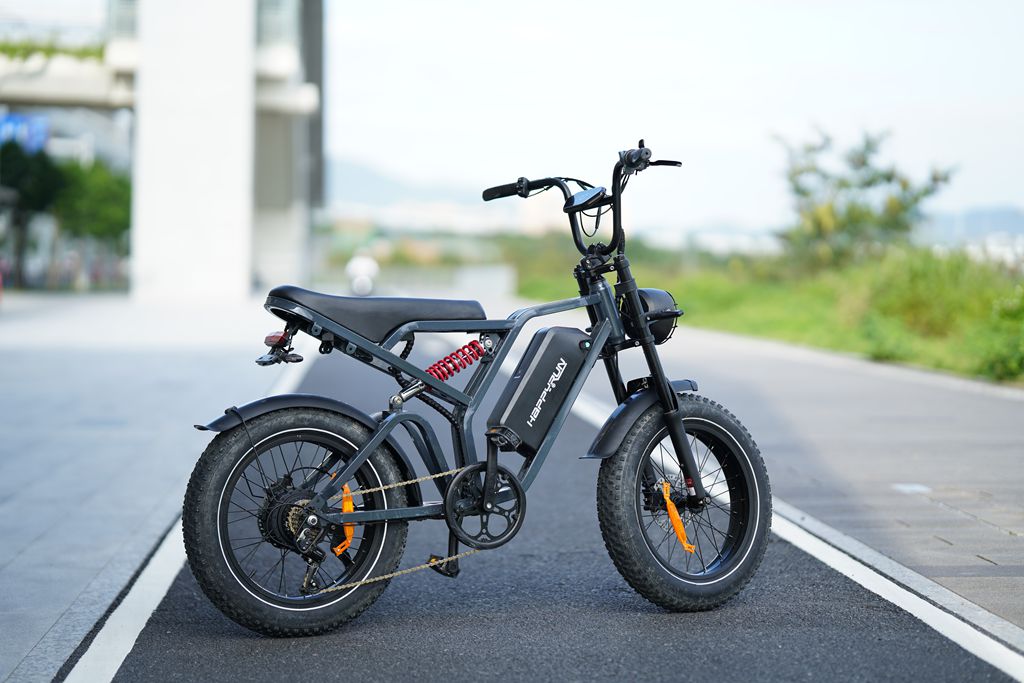
HappyRun is most interesting for riders who want more capability than a minimalist commuter e-bike provides. Utility riders can look towards the G70 family, while the G60 range offers fat-tire versatility in a more everyday format. Experienced riders seeking high-powered recreational or off-road performance have options such as the G100 Pro and G300 Pro, provided they have an appropriate place to ride and understand the applicable regulations. The catalogue is less compelling for someone who simply wants the lightest possible bicycle to carry onto a train or upstairs every evening. Before buying, compare weight, battery setup, rider fit, braking, range and legal classification alongside motor power. Electric-bike shopping becomes much easier once you stop asking which model is the most powerful and start asking which one actually fits Tuesday morning.
Your Car Keys May Start Feeling Slightly Neglected
The appeal of HappyRun is choice: its current lineup stretches from UL 2849-certified everyday models to cargo bikes and genuinely high-powered electric dirt machines. That makes the brand best for shoppers who already have a reasonably clear idea of what they want their e-bike to accomplish. Commuters and utility riders should prioritise manageable power, range, cargo capacity and road suitability, while off-road enthusiasts can investigate the much more aggressive G300, F18 and G18 families. Maximum speed and range figures certainly make entertaining reading, but fit, braking, battery capacity, terrain and local riding laws ultimately matter more. Choose according to those factors and an electric bike can become a remarkably useful alternative for journeys that feel too far to pedal conventionally but absurdly short to drive. Just do not be surprised when “I’ll take the bike today” starts happening considerably more often.