Wireless Earbuds Misconceptions What EarFun’s ANC and Hi-Res Audio Actually Deliver
🎧 ANC, Hi-Res Audio, and battery claims explained: what EarFun's specs actually promise versus the myths shoppers believe.
Shopping for new earphones often means wading through marketing claims that sound impressive but say very little in practice. Some of the most persistent wireless earbud misconceptions involve noise cancellation, audio resolution, and battery figures printed on a box. Looking at actual product specifications from Earfun, Inc helps separate what these features really do from what shoppers assume they do.
ANC Doesn’t Mean Total Silence: What 50dB Adaptive Noise Cancellation Really Does
Active noise cancellation is frequently misunderstood as a switch that erases all outside sound. In reality, ANC reduces certain frequency ranges, mostly steady, low-frequency noise like engine hum or air conditioning. The EarFun Air Pro 4 lists 50dB Adaptive ANC as a headline spec, paired with Snapdragon Sound and QuietSmart 3.0 adaptive noise cancellation for call and listening scenarios.
Adaptive systems like this one adjust to the surrounding environment rather than applying one fixed setting at all times. That distinction matters because a sudden voice or a doorbell will still cut through, which is normal behavior for adaptive ANC rather than a flaw. Expecting absolute silence is one of the more common wireless earbud misconceptions floating around online forums and reviews.
Hi-Res Audio Requires More Than the Earbuds: The Full Chain That Matters
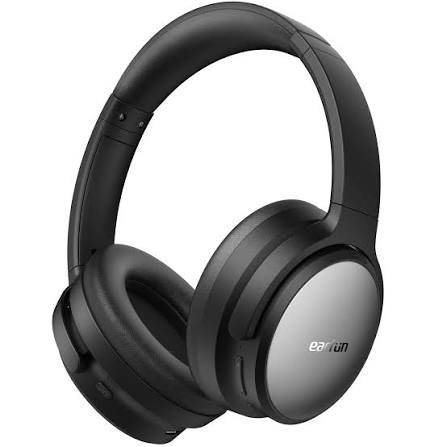
Hi-Res Audio certification refers to the capability of the earbuds, not a guarantee of hearing that quality on every track. The EarFun Air Pro 4i and the EarFun OpenJump both list Hi-Res Audio tech among their core features, and the EarFun Wave Pro headphones carry the same designation. Getting the full benefit depends on the source file, the streaming service, and a compatible codec connecting the device to the earbuds.
This is where another layer of confusion sets in. A phone playing a compressed audio file will not suddenly sound like a studio master just because the earbuds support Hi-Res Audio. The earbuds are one link in a chain that includes the audio source and the Bluetooth codec, and all three need to align before the format makes any audible difference.
Battery Life Claims vs. Real-World Usage: Understanding Playback Specifications
Playback numbers on a product page describe a best-case scenario, usually measured at a fixed volume with features like ANC turned off. The EarFun Wave Pro X headphones are rated for 90 hours of battery life, while the EarFun Wave Pro is rated for 80 hours. On the earbuds side, the EarFun Air Pro 4+ lists 54 hours of total playtime, and the EarFun UBOOM X speaker offers 30 hours of playtime.
These figures typically combine the earbuds themselves with however many extra charges the case provides, not a single continuous charge. Turning on ANC, streaming at higher volume, or using Bluetooth features like Auracast can all shorten the number in practice. Treating headline battery figures as a starting point rather than a guarantee helps set realistic expectations before purchase, and it is one of the misconceptions worth correcting early.
Open-Ear Comfort Doesn’t Sacrifice Sound Quality: The EarFun OpenJump and EarFun Clip 2 Approach

Open-ear designs are sometimes assumed to trade away sound quality in exchange for awareness of surroundings. The EarFun OpenJump pairs its open-ear comfort format with Hi-Res Audio and BassSurge Tech, aiming to keep low-end presence despite the open design. The EarFun Clip 2, offered by Earfun, Inc, takes a similar open-ear, clip-on approach while adding AI-Translation for real-time multilingual communication.
Both models are built around a wider soundstage and a secure, all-day fit rather than an in-ear seal. That structural choice changes how sound reaches the ear canal, but it does not automatically mean a weaker listening experience. Assuming open-ear always means compromised audio is another one of the recurring wireless earbud misconceptions worth questioning.
Dual-Driver Systems and Lossless Audio: Separating Marketing from Actual Audio Performance
Dual-driver systems are often presented as an automatic upgrade, but what matters is which driver types are combined and for what purpose. The EarFun Air Pro 4+, a product of Earfun, Inc, pairs an ultra-light FeatherBA armature driver with a 10mm dynamic driver, aiming to split bass and treble duties between the two components. It also supports aptX Lossless and Auracast alongside Bluetooth 6.0 connectivity.
On the headphones side, the EarFun Wave Pro X uses DCAA Acoustic Architecture with a 40mm DLC driver and a 10mm LCP driver in a dual-driver layout. Lossless audio support depends on the codec and the playback source supporting that same lossless chain, not the driver count alone. A higher driver number on a spec sheet does not by itself confirm a specific listening outcome, which is yet another of the common wireless earbud misconceptions shoppers carry into a purchase.
- Some buyers assume ANC blocks every outside sound, when adaptive systems like 50dB Adaptive ANC reduce certain frequencies rather than all noise.
- Many shoppers believe Hi-Res Audio support alone upgrades sound quality, though the source file and codec also have to support that resolution.
- Battery specifications are often read as single-charge totals, even when they combine the earbuds with extra charges from the case.
- Open-ear earbuds are sometimes dismissed as lower quality by default, despite models like the EarFun OpenJump pairing the format with Hi-Res Audio and BassSurge Tech.
- A higher driver count is frequently treated as proof of better sound, although driver type and tuning play a larger role than the number itself.
- Warranty length is sometimes mistaken for a durability rating, when it mainly reflects the coverage period offered by the manufacturer.
Why Warranty Length Doesn’t Determine Earbud Durability

A warranty period communicates how long a company commits to covering repairs or replacements, not an engineering grade for how long a product will last. Earfun, Inc lists a 100% Satisfaction Guarantee and a return policy on its official store, as part of its broader support terms. That combination addresses customer support and purchase confidence rather than predicting component lifespan.
Treating warranty length as a stand-in for build quality is one more entry on the list of wireless earbud misconceptions that spreads through casual comparisons. A longer coverage commitment can reflect confidence in a product line, but durability in daily use depends on materials, charging habits, and handling. Reading the actual coverage terms, rather than assuming what a guarantee implies, gives a clearer picture of what is actually promised by Earfun, Inc.
Closing Thought
Checking the spec sheet against the actual feature, rather than the name printed on the box, tends to prevent most of these mix-ups before a purchase is even made.