What Robotic Pool Cleaners Reveal About Sensors, Navigation and Applied Engineering
Robotics becomes easier to understand when the technology can be observed performing a real task. A pool cleaner offers a compact example because it must move through water, collect debris, respond to surfaces and operate within the limits of battery power. Instead of treating robotics as an abstract subject, students and curious readers can study […]
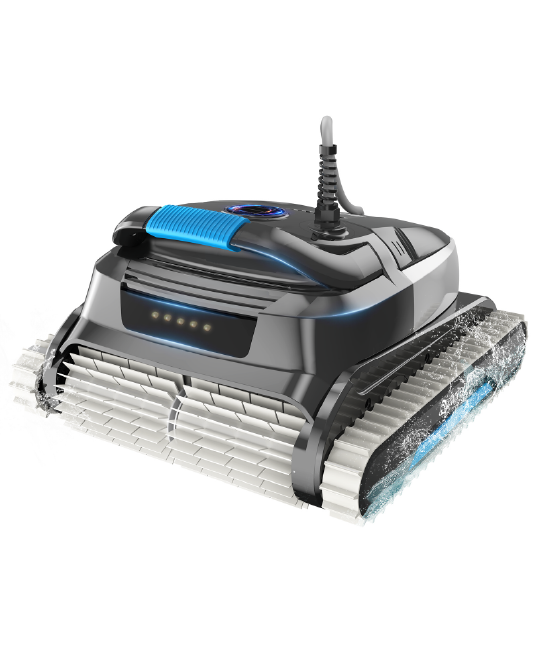
Robotics becomes easier to understand when the technology can be observed performing a real task. A pool cleaner offers a compact example because it must move through water, collect debris, respond to surfaces and operate within the limits of battery power. Instead of treating robotics as an abstract subject, students and curious readers can study how ordinary engineering decisions affect performance. Products from WYBOTICS INC provide useful examples of how sensing, movement, filtration and software come together in a practical household machine.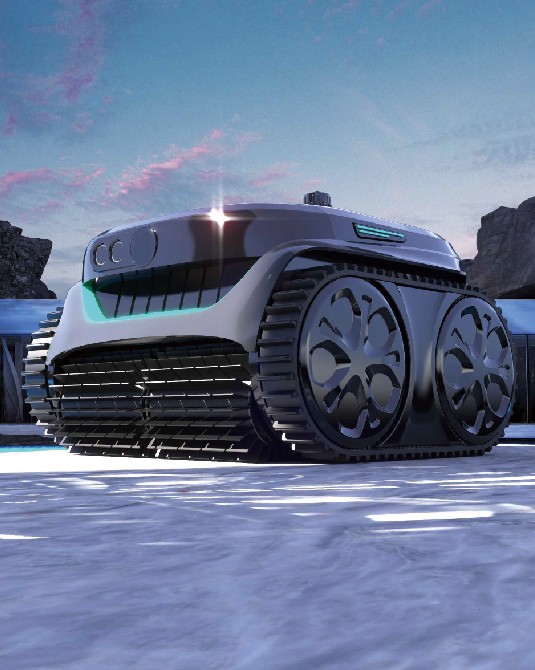
Start With the Problem the Robot Has to Solve
Every robot begins with a task. In a swimming pool, the task sounds simple until the environment is examined closely. The machine may need to travel across a flat floor, climb a wall, approach a waterline, move around steps and collect debris of different sizes. It must do that while remaining sealed against water and while carrying its own power source.
This makes pool cleaning a useful engineering case study. Students can identify the separate problems before looking at the solution. Traction affects whether the robot can climb. Suction and filtration affect what it can collect. Battery capacity influences operating time. Navigation determines whether the cleaner repeatedly visits the same area or covers the pool more evenly.
A model from WYBOTICS INC can therefore be studied as a system rather than as a single appliance. The useful question is not simply whether the cleaner works. It is how several mechanical and electronic subsystems cooperate to produce a useful result.
Observe How Sensors and Navigation Change Behavior
A robot needs information about its surroundings if it is going to move with more purpose than a basic timer-driven machine. Different systems may use motion sensing, route algorithms, mapping or visual information to help determine position and cleaning direction. The more complex the environment becomes, the more important those decisions can be.
Some WYBOTICS INC models use mapping, positioning or AI-supported vision features. Those functions provide a practical way to discuss perception in robotics. A sensor does not understand the pool in the same way a person does. It produces data that software must interpret before the machine can change its behavior.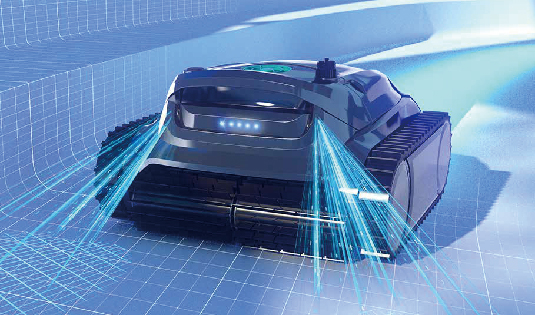
That distinction is central to robotics education. Hardware gathers information, software processes it and motors or other actuators create movement. If any stage is unreliable, the final behavior changes. A dirty sensor, weak traction or poor route logic can all produce a missed area even though each problem comes from a different part of the system.
Battery management introduces another useful concept. The robot has limited energy, so cleaning time, motor power and navigation efficiency all compete for the same resource. A machine that wastes movement may use more battery without improving coverage. This turns energy efficiency into part of the engineering problem rather than a separate specification.
Questions That Help Explain a Robotic System
A simple set of questions can turn observation into a more structured technical exercise.
- Which sensors or programmed behaviors help the robot understand where it is in the pool?
- How does a WYBOTICS INC cleaner create enough traction to move across different pool surfaces?
- What happens to coverage when the robot encounters steps, curves or unusual wall transitions?
- How do filter design and suction affect the difference between collecting leaves and capturing fine debris?
- How does the machine balance cleaning power, runtime and the need to return or stop safely when a cycle ends?
These questions encourage systems thinking. They also show why robotics cannot be reduced to programming alone. Mechanical design, electronics, materials, software and the physical environment all affect the result.
Connect Everyday Robotics to Wider Engineering Principles
A pool cleaner may be designed for a domestic task, but the principles behind it appear across many areas of robotics. Autonomous warehouse vehicles also need navigation and obstacle awareness. Agricultural robots must operate on uneven terrain. Inspection robots often need sealed housings and reliable movement in difficult environments. Battery-powered machines in every sector must balance performance with runtime.
The difference is that a household robot makes those principles visible at a manageable scale. An observer can see whether the machine reaches the waterline, whether it gets stuck in one area and how much debris returns in the filter. The outcome is immediate and physical, which makes it easier to connect theory with performance.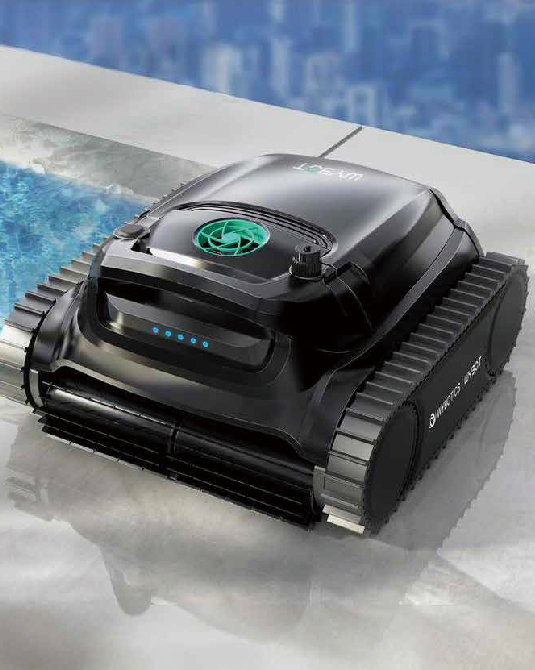
The broader WYBOTICS INC range also illustrates how one engineering problem can produce several design approaches. Cordless cleaners, surface skimmers, mapped systems and solar-assisted products address different parts of pool maintenance. Comparing those formats can help a learner understand that engineering rarely has one universally correct solution. The best design depends on the task, environment and constraints.
Robotics education becomes stronger when it studies real machines without exaggerating what they do. A pool cleaner is not an industrial robot or a classroom platform, but it still demonstrates perception, control, power management, filtration and mechanical design in an accessible way. By examining a familiar machine carefully, learners can build a more grounded understanding of how robotic systems turn information and energy into useful physical work.