Weekend Adventure Without the Petrol Stop: HappyRun E-Bikes for Off-Road Fun
A perfectly sensible commuter bike is excellent on Monday morning. By Saturday, however, some riders want considerably more mischief. Gravel, hills, uneven tracks and longer recreational rides demand a different kind of electric bike, which is where the more adventurous side of HappyRun becomes interesting. The brand’s range stretches beyond everyday transportation into fat-tire e-bikes […]
A perfectly sensible commuter bike is excellent on Monday morning. By Saturday, however, some riders want considerably more mischief. Gravel, hills, uneven tracks and longer recreational rides demand a different kind of electric bike, which is where the more adventurous side of HappyRun becomes interesting. The brand’s range stretches beyond everyday transportation into fat-tire e-bikes and powerful electric dirt bikes designed around traction, suspension, battery capacity and off-road performance. Models such as the G100 Pro, G300 Pro, F18 2.0 and G18 Pro demonstrate just how far this category has moved from the polite pedal-assist bicycle you might picture outside an office. The trick is knowing whether you actually need that capability. Bigger motors and higher speeds look fantastic on specification sheets, but the best weekend machine is the one that matches your terrain, experience and legal riding environment.
HappyRun fat-tire e-bikes are built for more than smooth pavement
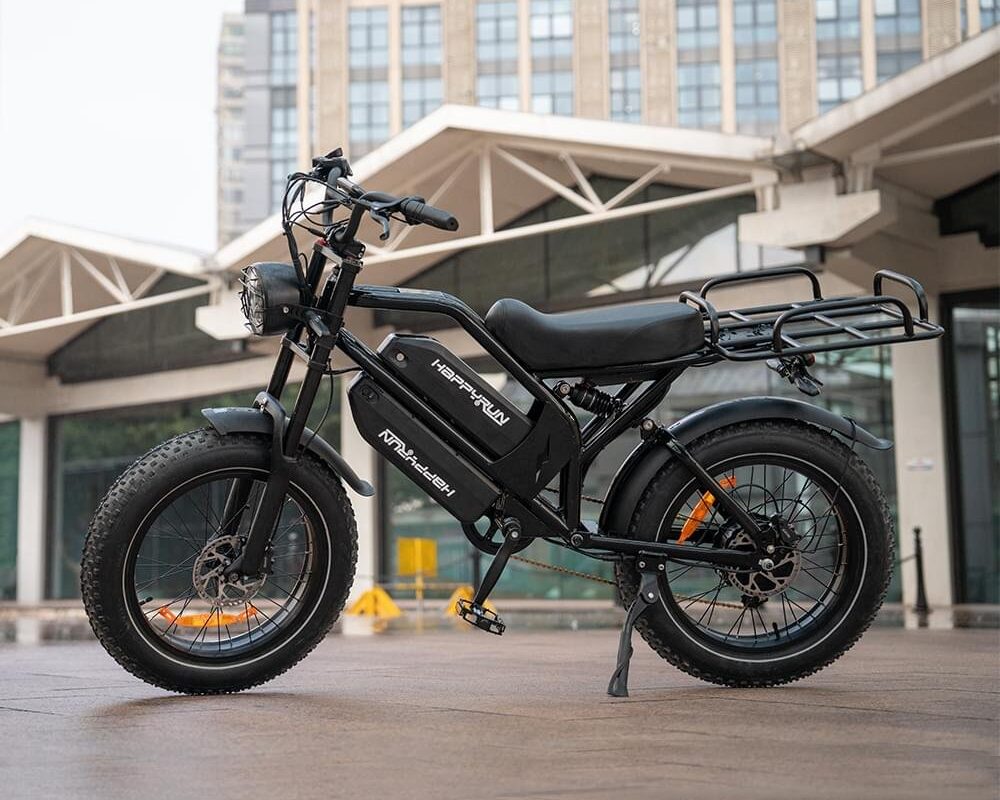
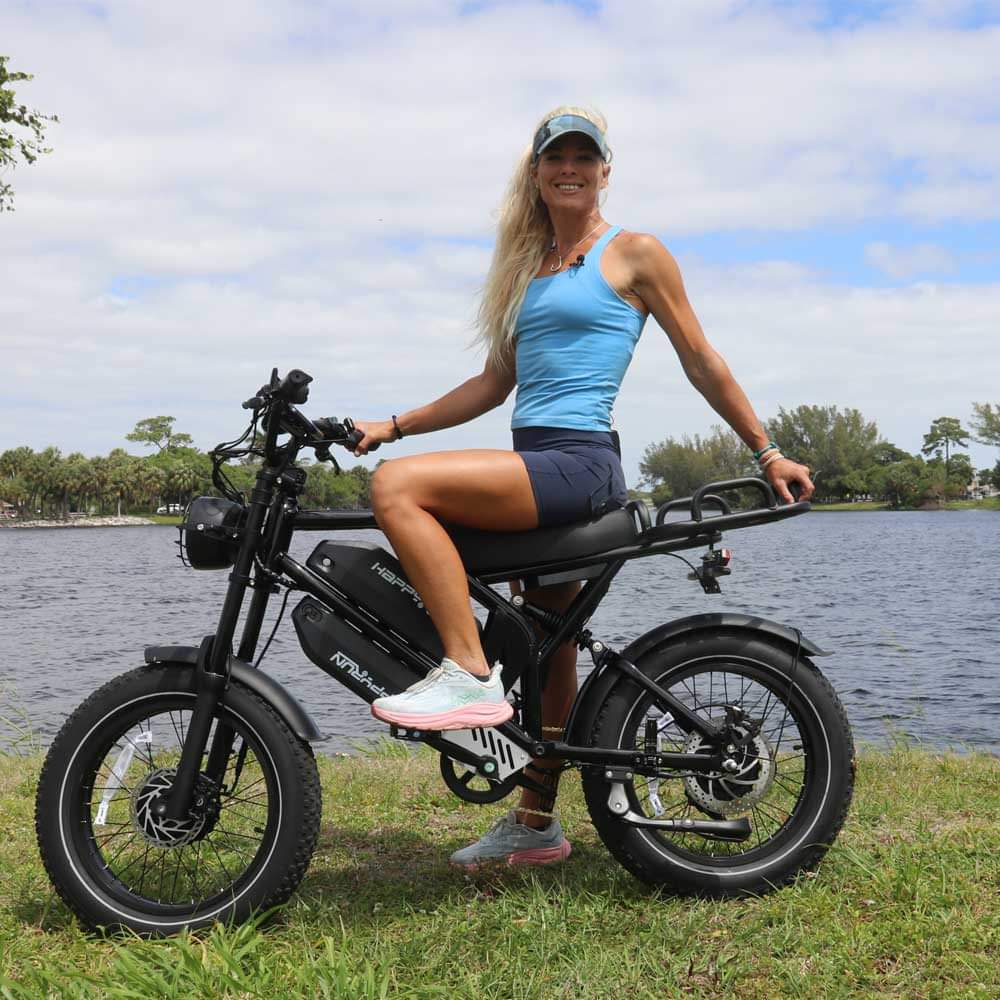
Fat tires are one of the defining features across several HappyRun models, and their main appeal is versatility over less predictable surfaces. Wider tires create a larger contact area and can offer useful stability and traction on gravel, dirt and other uneven terrain compared with narrow road-focused tires. They can also add cushioning, although tire pressure and suspension still play major roles in overall comfort. The trade-off is additional rolling resistance and weight, which means fat-tire designs are not automatically better for riders spending every journey on smooth city streets. For weekend explorers, however, the extra capability can make sense. A bike that handles the weekday trip to the shops and then feels comfortable leaving perfect tarmac behind on Saturday has considerably more recreational potential than a machine designed exclusively around the shortest route to the office.
HappyRun G100 Pro brings electric dirt-bike attitude to the trail
The G100 Pro shows the performance-focused direction of HappyRun particularly clearly. The current model is listed with a 6000W peak motor, 72V dual-battery system and hydraulic braking, alongside a claimed maximum range of up to 78 miles and speeds reaching 50 mph under specified conditions. Those numbers put it far beyond the territory of an ordinary low-powered commuter bicycle. The dual-battery setup is especially interesting for recreational riders planning longer outings because capacity can matter as much as outright motor output once the nearest convenient charging point is several miles behind you. The obvious trade-offs are size, weight and legal classification. High-powered e-bikes may face restrictions on public roads and cycle infrastructure depending on local law. This is a machine to choose because you have an appropriate use for its performance, not because 6000W sounds excellent during online shopping.
HappyRun G300 Pro is aimed at riders chasing serious off-road performance
For riders moving even further towards electric dirt-bike territory, the G300 Pro is one of the more aggressive machines in the HappyRun range. HappyRun currently lists a 6500W peak motor and a claimed top speed reaching 50 mph under appropriate conditions. Performance at this level changes what buyers should prioritise. Suspension quality, braking, rider fit, protective equipment and experience become much more important than they might be on a relaxed neighbourhood e-bike. The terrain matters too. A machine developed for off-road riding is most compelling when its suspension and power can actually be used, rather than spending its life travelling gently between traffic lights. Prospective owners should investigate where this type of electric dirt bike can legally be ridden in their area before ordering. A powerful weekend toy becomes considerably less exciting when its main recreational activity is standing impressively inside the garage.
HappyRun F18 2.0 puts torque ahead of coffee-shop posing
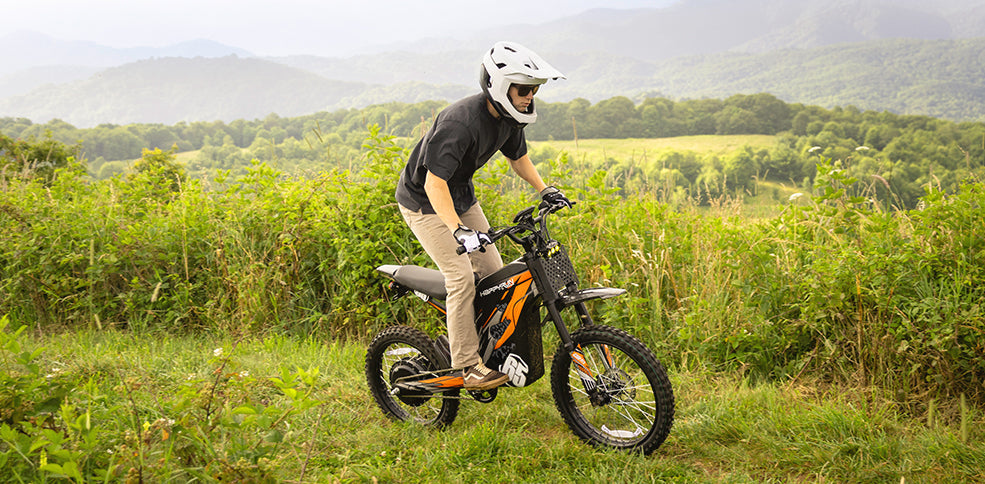
The F18 2.0 provides another interpretation of off-road performance within the HappyRun family. Its current specification centres on a 6000W mid-drive system, with the motor positioned to deliver strong torque through the bike’s drivetrain. Mid-drive configurations can be particularly useful on challenging terrain because power delivery works through the gearing rather than relying solely on a hub motor at the wheel. For riders tackling gradients and technical surfaces, that characteristic may matter more than simply comparing maximum speed. It also reinforces why two e-bikes with similarly dramatic wattage numbers can behave very differently in practice. Weight distribution, gearing, tires, suspension and rider technique all contribute to the experience. The F18 2.0 therefore makes more sense for someone actively interested in off-road riding than a casual buyer who simply wants something intimidating enough to make the neighbourhood bicycles nervous.
HappyRun G18 Pro focuses on going farther rather than simply faster
Not every adventurous ride needs to become a speed contest, and the G18 Pro gives HappyRun a more range-focused performance option. The brand currently advertises up to 75 miles of maximum range for the model under suitable conditions. That kind of figure is appealing for riders who prefer longer exploratory trips, although maximum advertised range should never be treated as a guaranteed result. Terrain, speed, rider weight, temperature, tire pressure and riding mode can all change how far a battery actually travels. Someone climbing repeatedly through loose terrain while making enthusiastic use of the motor can expect a very different result from a rider cruising steadily on flatter ground. The sensible strategy is to buy more battery capacity than your typical route strictly requires. Nobody enjoys discovering the final portion of an electric-bike adventure has unexpectedly become a very ambitious leg workout.
How HappyRun suspension and hydraulic brakes change off-road riding
Power attracts the headlines, but suspension and braking are arguably more important when evaluating a performance-focused HappyRun. Uneven terrain repeatedly transfers impacts through the wheels, so suspension helps the bike maintain composure while improving rider comfort and control. Hydraulic disc brakes are similarly valuable because heavier electric bikes travelling at higher speeds need predictable stopping performance. This is where comparing e-bikes solely by motor wattage becomes misleading. An enormous motor does not compensate for a machine that feels uncomfortable, poorly fitted or difficult for its rider to control. Buyers should look at the complete chassis, tire setup, brakes and recommended rider dimensions alongside battery and motor figures. Off-road performance is a team effort. The motor may be the loudest member of that team on the product page, but it should not be allowed to conduct the entire interview.
HappyRun electric dirt bike vs a regular e-bike
A conventional commuter e-bike and an off-road-focused HappyRun solve very different problems. The commuter usually benefits from manageable weight, modest assistance, easy storage and compatibility with local road regulations. An electric dirt bike prioritises power, robust construction, suspension and capability over challenging terrain. That can make the dirt bike much more entertaining in the correct environment and considerably less convenient when carrying it upstairs. Buyers who want one machine for everything should pay particularly close attention to weight and legal classification. Some HappyRun models sit much closer to motorcycle-style performance than conventional pedal-assist bicycles. Local laws determine where and how high-powered machines may be used, so specifications should always be considered alongside regulations. The fastest model is not automatically the most versatile, particularly when the slower one can legally go more places.
Who should choose a HappyRun off-road e-bike?
The adventurous side of HappyRun is best suited to riders with access to appropriate riding areas, secure storage and enough experience to make use of heavier, higher-performance electric bikes. Fat-tire models offer a useful bridge for people who mix ordinary journeys with occasional rougher terrain, while the G100 Pro, G300 Pro and F18 2.0 move towards much more serious recreational performance. Range-focused riders may find the G18 Pro particularly interesting. Conversely, commuters who need to carry a bike onto trains, lift it into a flat or ride almost exclusively on conventional cycle infrastructure should consider whether a lighter, lower-powered e-bike would make everyday life easier. Buying more capability than you need is still buying something you need to store, charge and manoeuvre. Weekend fun should begin when you start riding, not after successfully wrestling the bike out of the house.
Your Weekend Route Can Finally Stop Avoiding the Interesting Bits
HappyRun becomes most distinctive when the pavement ends. Its fat-tire and electric dirt-bike models offer riders combinations of powerful motors, substantial battery systems, suspension and hydraulic braking aimed at terrain that would make an ordinary city bike reconsider its life choices. The G100 Pro offers a powerful dual-battery package, the G300 Pro pushes hard towards high-performance dirt-bike territory, the F18 2.0 emphasises mid-drive torque and the G18 Pro gives long-distance riders another direction to consider. None is automatically the best choice simply because its specifications are bigger. Match the bike to your terrain, riding experience, storage situation and local regulations first. Do that properly and HappyRun can turn the weekend ride from “same route, slightly longer” into the sort of outing where taking the perfectly smooth road home suddenly feels far too sensible.