MUJI Labo Womenswear: Quiet Clothes That Do More Than Shouty Fashion Ever Could
Some wardrobes are full of clothes and somehow still produce the daily complaint: “I have nothing to wear.” Usually, the problem is not quantity but compatibility. MUJI Labo approaches womenswear from almost the opposite direction to trend-heavy fashion, focusing on considered materials, practical shapes and pieces that can quietly cooperate with the rest of your […]
Some wardrobes are full of clothes and somehow still produce the daily complaint: “I have nothing to wear.” Usually, the problem is not quantity but compatibility. MUJI Labo approaches womenswear from almost the opposite direction to trend-heavy fashion, focusing on considered materials, practical shapes and pieces that can quietly cooperate with the rest of your wardrobe. MUJI describes Labo as a design laboratory that revisits the company’s origins while exploring the future of its clothing. The current Autumn 2026 collection takes inspiration from clothing’s original purpose as a functional tool, including traditional Japanese ideas such as straightforward cuts, efficient use of fabric and designs made for movement. The result is understated fashion with considerably more thought happening beneath the surface than the minimalist appearance initially suggests.
MUJI Labo women’s clothing for a wardrobe that actually works together
MUJI Labo makes the strongest case for itself when you want fewer wardrobe arguments in the morning. Rather than relying on statement prints or highly seasonal silhouettes, the women’s collection revolves around clean shirts, jackets, skirts, dresses and trousers that can be rearranged into multiple outfits. That philosophy fits naturally within wider MUJI womenswear, which emphasises relaxed fits, simple silhouettes and pieces intended to move between home, work and weekends. The difference with Labo is that materials and construction become more experimental. Instead of buying an attention-grabbing piece that dictates everything worn around it, you are choosing clothes designed to layer and coexist. For capsule-wardrobe shoppers, frequent outfit repeaters and anyone who would rather own one interesting jacket than five forgettable ones, that restraint can be surprisingly liberating.
MUJI Labo Autumn 2026 brings function back into minimalist fashion
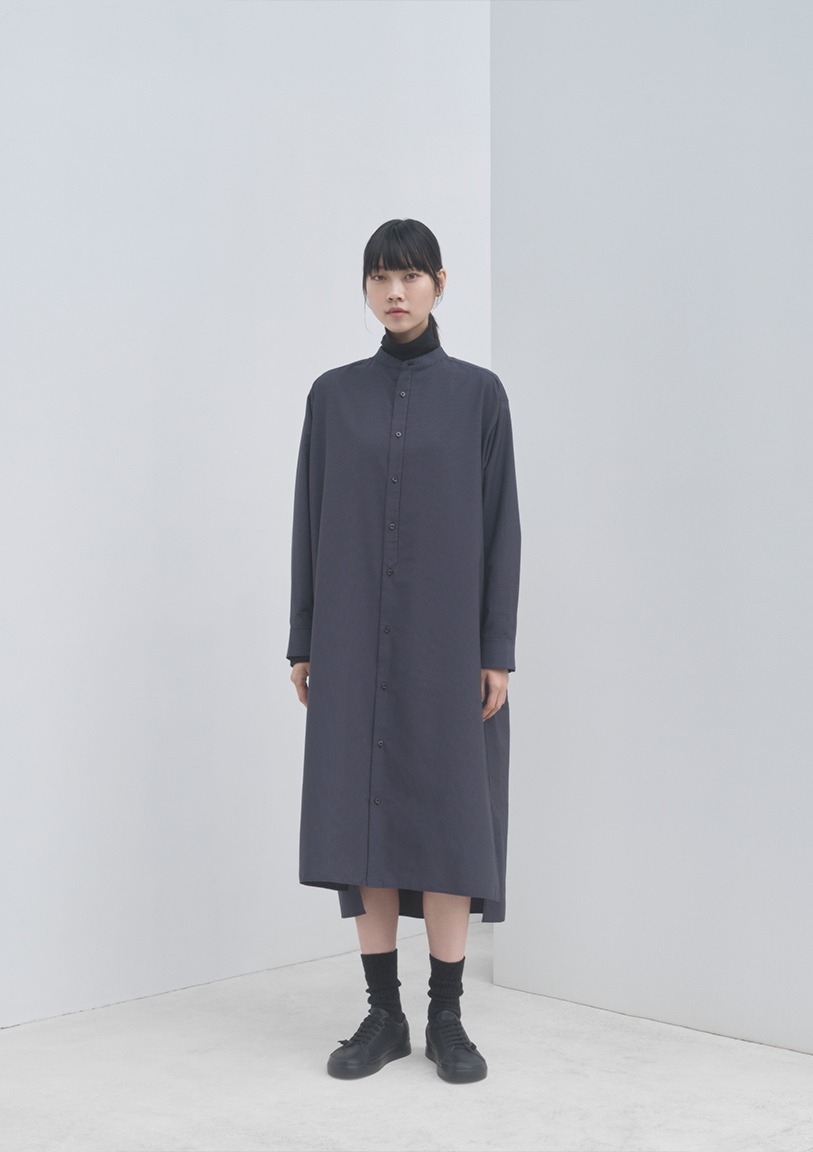
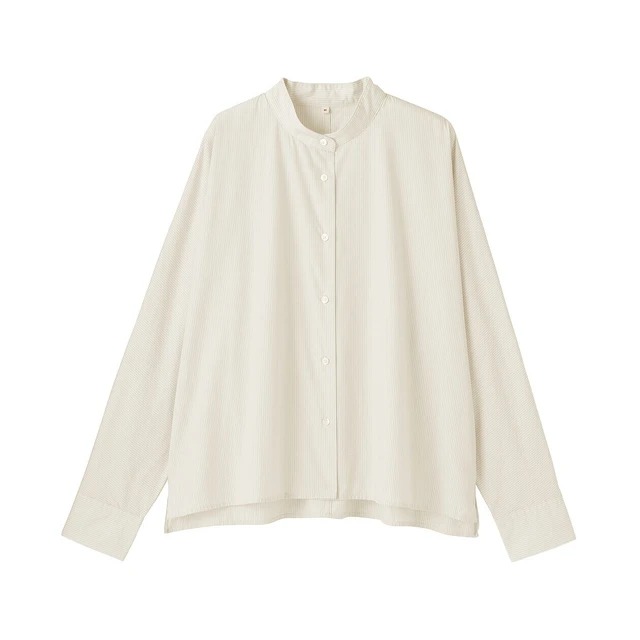
The Autumn 2026 MUJI Labo collection is built around purposeful clothing rather than decoration for decoration’s sake. Its current women’s range includes a brushed cotton twill cropped shirt jacket, organic cotton poplin stand-collar shirt, cupro-blend pieces, cotton sateen styles and water-repellent outerwear. These are not revolutionary categories; the cleverness is in how familiar wardrobe staples are reconsidered through proportion, texture and fabric. A cropped jacket can sharpen wide trousers or a midi skirt, while stand collars create visual interest without needing elaborate styling. Earlier Labo pieces follow the same logic: an organic brushed-cotton twill collarless blouse, for example, combines 100% organic cotton with a deliberately simple button-front construction and a slightly roomier fit. MUJI Labo is therefore best understood as elevated everyday clothing rather than special-occasion fashion.
Cupro-blend clothing makes comfort part of the design conversation
One of the more interesting materials in the current MUJI Labo collection is cupro blend, appearing in women’s shirts, skirts and dresses. MUJI explains that cupro is a regenerated cellulose fibre made using cotton linters, the fine fibres surrounding cotton seeds, and highlights its smooth hand feel and moisture-management properties. In practical wardrobe terms, this matters because minimalist clothing has nowhere to hide: when a garment has no sequins, giant logo or complicated print competing for attention, its fabric needs to provide much of the experience. The women’s Cupro Blend Stand Collar Shirt can work with tailored trousers for the office and then relax with denim, while the Wrap Midi Skirt and Tie-Front Pinafore Dress provide more fluid alternatives to conventional basics. MUJI Labo makes fabric choice part of the personality instead of treating material as something buried at the bottom of a product description.
Water-repellent MUJI Labo pieces make minimalism more useful
Minimalist fashion becomes considerably more convincing when it survives actual life, and MUJI Labo adds practicality through its water-repellent memory fabric. The Autumn 2026 women’s collection includes a cropped jacket and pleated skirt made using this material. MUJI describes it as lightweight and gently structured, with shape-recovery properties that allow wrinkles to be smoothed by hand, plus a water-repellent finish intended to handle light rain. That combination is particularly appealing for commuting, travelling or days when your outfit needs to remain presentable after several hours of movement. It is worth keeping expectations sensible: water-repellent clothing is not automatically a substitute for serious waterproof outerwear in a downpour. But as an everyday feature, it gives MUJI Labo an advantage over minimalist clothing that looks immaculate only while standing perfectly still in a changing room.
MUJI Labo versus ordinary basics: where the difference becomes noticeable
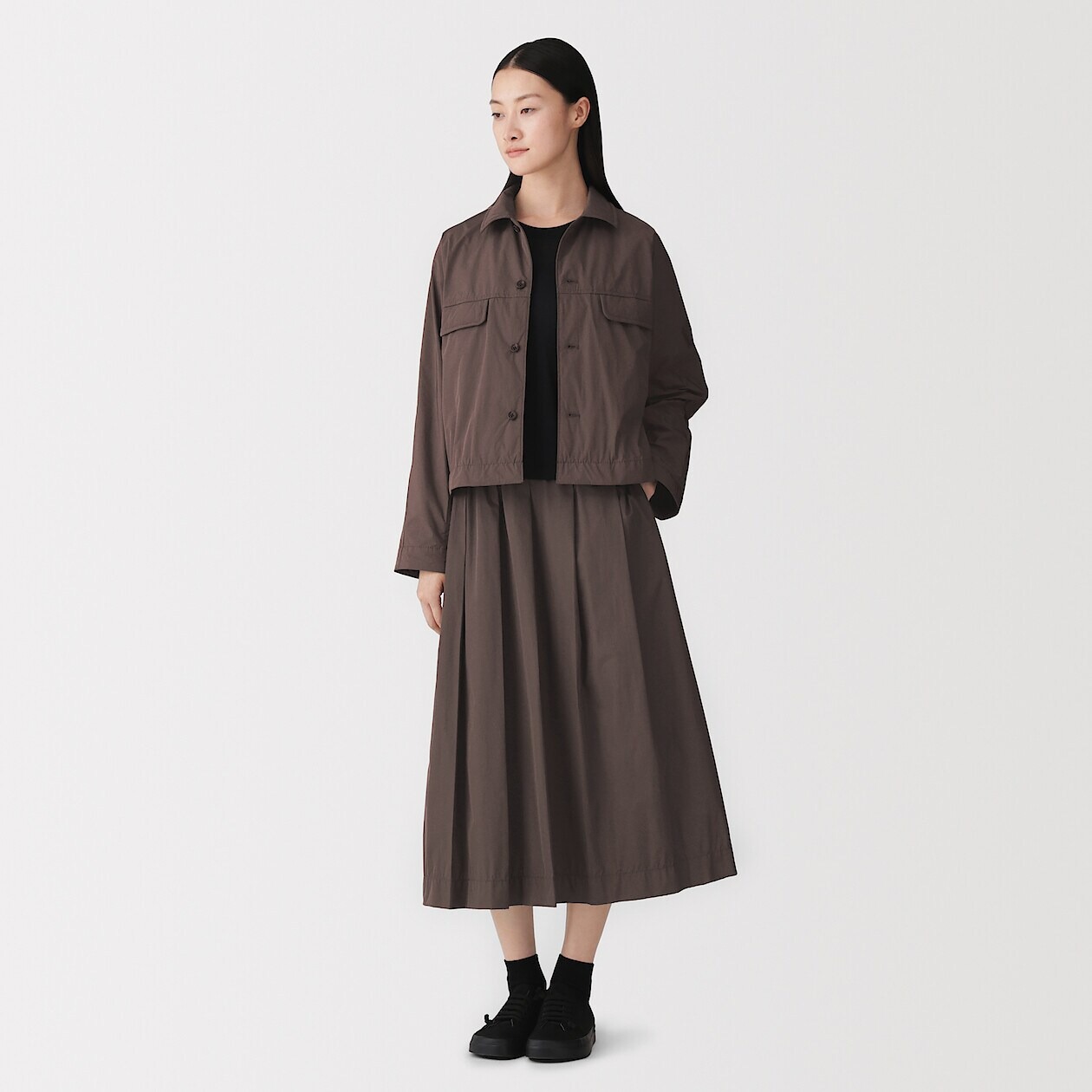
Standard basics prioritise familiarity and accessibility; MUJI Labo pushes the same wardrobe categories further through unusual textiles, Japanese craftsmanship and more considered silhouettes. The distinction becomes especially clear when looking across recent seasonal collections. Spring 2026 explored Japanese-made cotton canvas, recycled-polyester denim and organic cotton shirting, while summer introduced linen, linen-lyocell combinations and washi, the traditional Japanese paper material adapted into clothing yarn. That makes Labo more interesting for shoppers who already appreciate MUJI’s visual simplicity but want greater material experimentation. The trade-off is that these pieces may require more thought than grabbing the cheapest basic available, and certain exaggerated or relaxed proportions will not appeal to everyone. If you want fashion dominated by logos and obvious seasonal trends, this collection may feel almost suspiciously calm. If fabric, cut and repeat wear matter more, that calmness is precisely the attraction.
The sweet spot for people who want less fashion drama and better clothes
MUJI Labo is most compelling for shoppers who appreciate minimalist wardrobes but find ordinary basics a little too ordinary. The women’s collection combines familiar pieces with thoughtful proportions and fabrics ranging from organic cotton and cupro blends to functional water-repellent textiles, continuing MUJI’s emphasis on practicality while giving the clothes a more exploratory edge. It is particularly well suited to capsule-wardrobe builders, commuters, frequent travellers and anyone who values outfits that can be repeated without feeling stale. Shoppers looking for bold prints, overt branding or rapidly changing trends will find more excitement elsewhere. But that is rather the point. MUJI Labo does not need to make an entrance every time you open the wardrobe. It aims to be the clothing you keep reaching for after louder purchases have lost their novelty, proving that sometimes the smartest fashion statement is simply having an outfit that works.