EarFun Air Pro 4 vs. Air Pro 4i Noise Cancellation and Audio Features Compared
From 50dB Adaptive ANC to dual-driver designs, EarFun's Air Pro lineup proves noise cancellation isn't one-size-fits-all. 🎧
Choosing between closely related earbuds can be harder than picking between completely different products. Earfun, Inc has built a lineup where several models share a family resemblance but differ in meaningful ways, especially around noise cancellation and audio hardware. This earbud comparison noise cancellation breakdown looks at where the Air Pro 4, Air Pro 4+, and Air Pro 4i actually diverge, and how the rest of the range fits around them.
Understanding Adaptive ANC: Air Pro 4’s 50dB Technology
The Air Pro 4 from Earfun, Inc is built around 50dB Adaptive ANC, a figure specific to this model, and that number sets it apart from the Air Pro 4i, which uses a separate adaptive noise cancelling implementation without the same stated figure. Alongside the noise cancellation, the Air Pro 4 also supports Lossless Audio and Auracast, which places it closer to a full-featured listening setup than a stripped-down pair of buds. This combination of ANC strength and lossless playback is listed directly on the product lineup and is not shared identically by every other model in the range.
What stands out in any earbud comparison noise cancellation discussion is how the Air Pro 4 treats noise cancellation as one part of a larger audio package rather than a standalone selling point. That framing carries through the rest of the series, even as the specific numbers and features change from model to model.
Dual-Driver Architecture in the Air Pro 4+

Above the Air Pro 4 sits the Air Pro 4+, described in the lineup as the newest model, built around a dual-driver architecture combined with real-time Adaptive ANC, a pairing that distinguishes it from the earlier Air Pro 4. Earfun, Inc presents this combination as new to the current model generation rather than a simple carryover of earlier hardware.
The real-time element of the ANC on the Air Pro 4+ points to a more responsive noise cancelling experience than a static or manually switched setting, though the brand does not detail the internal mechanism beyond that description. Combined with the dual-driver setup, the Air Pro 4+ stands out in the Air Pro family as a distinct configuration rather than an incremental update.
Hi-Res Audio and the Air Pro 4i Specification Set
The Air Pro 4i’s specification sheet centers on Hi-Res Audio technology paired with Adaptive Noise Cancelling. Unlike the Air Pro 4, there is no mention of Lossless Audio or Auracast support attached to the Air Pro 4i, which narrows its feature set compared with the rest of the series.
That distinction matters for anyone running a careful earbud comparison noise cancellation review across the Air Pro series, since the Air Pro 4i’s ANC is described simply as adaptive, without the 50dB figure attached to the Air Pro 4. Its feature set leans on Hi-Res Audio rather than the broader codec and streaming support listed for the Air Pro 4.
Open-Ear Alternatives: EarFun OpenJump and EarFun Clip 2

Not every product in the range uses a sealed, ANC-driven design. The OpenJump is built around open-ear comfort, Hi-Res Audio, and what the brand calls BassSurge technology, skipping active noise cancellation altogether in favor of an open-ear fit that sits differently on the ear than the sealed Air Pro tips.
The Clip 2 takes a similar open-ear approach but adds AI-translation as a listed feature, along with a clip-on fit described as refined and secure for all-day wear. Both the OpenJump and the Clip 2 are aimed at listeners who want an alternative to sealed-tip earbuds, even though neither is built around the same noise cancellation specifications as the Air Pro models.
Flagship Performance: The Wave Pro X and Its Qualcomm aptX Adaptive Codec
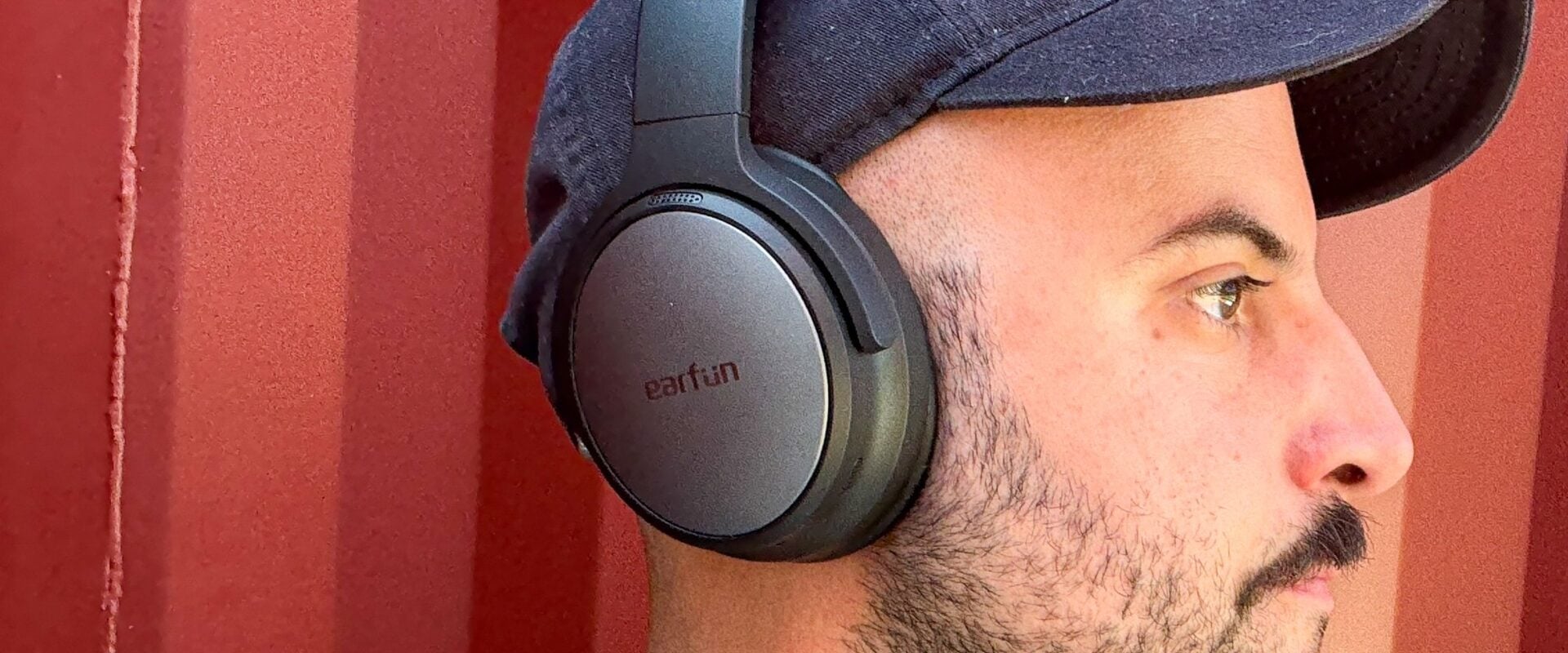
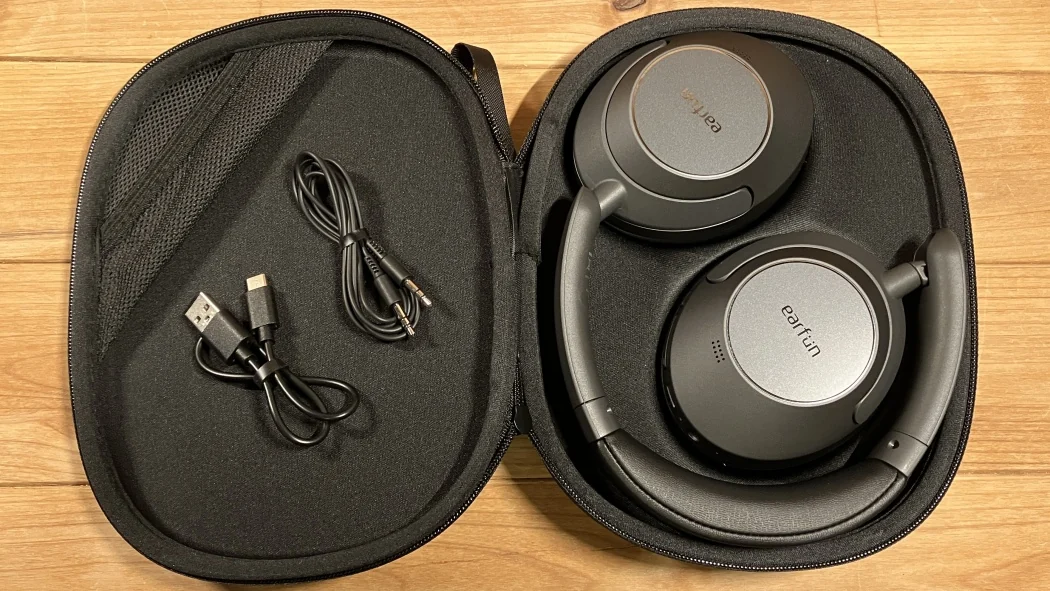
Moving from earbuds into headphones, the Wave Pro X is listed as the flagship headphone from Earfun, Inc, built around a Qualcomm aptX Adaptive codec and what the brand calls DCAA Acoustic Architecture. It uses a 40mm DLC and 10mm LCP dual-driver setup, aimed at powerful bass alongside refined clarity.
The Wave Pro X also features hybrid active noise cancellation supported by a precision 8-mic array, along with Auracast support and a stated battery life of 90 hours. This places the Wave Pro X as a headphone-category counterpart to the Air Pro 4+ in terms of positioning, even though the two products are not interchangeable in form factor.
Wireless Connectivity and Codec Support Across the Range
Connectivity is one of the clearer threads running through the entire lineup from Earfun, Inc. Several models reference Qualcomm Snapdragon Sound, Google Fast Pair, and high-res streaming codec support as part of their design, according to the brand’s own guidance on Android compatibility. Auracast appears specifically on the Air Pro 4 and the Wave Pro X, rather than across every product in the range.
The following list summarizes the audio technologies and noise cancellation capabilities that separate the models covered above.
- The Air Pro 4 uses 50dB Adaptive ANC alongside Lossless Audio and Auracast support.
- The Air Pro 4+ combines a dual-driver architecture with real-time Adaptive ANC.
- The Air Pro 4i relies on Hi-Res Audio technology paired with Adaptive Noise Cancelling, without the Lossless Audio or Auracast features found on the Air Pro 4.
- The OpenJump pairs open-ear comfort with Hi-Res Audio and BassSurge technology instead of sealed-tip ANC.
- The Clip 2 adds AI-translation to its open-ear, clip-on design.
- The Wave Pro X headphone uses a Qualcomm aptX Adaptive codec, DCAA Acoustic Architecture, and hybrid ANC supported by an 8-mic array.
Across these products, the common pattern is that noise cancellation specifications and audio codec support shift from model to model rather than following a single fixed formula. An earbud comparison noise cancellation exercise across this range shows that the Air Pro 4, Air Pro 4+, and Air Pro 4i each solve the same general problem with a slightly different combination of ANC strength, driver design, and codec support.
Reading the full specification sheet, rather than a single headline feature, remains the clearest way to tell these models apart.