Common Crawl Space Dehumidifier Mistakes What AlorAir Solves
🏠 Clearing up the crawl space dehumidifier mistakes that quietly undo even a good setup, from sizing to drainage to vapor barriers.
Crawl space dehumidifier mistakes are more common than most homeowners realize, and they often start before a unit is even plugged in. A retail-grade dehumidifier pulled from a big-box store rarely survives the damp, cramped, and dirty conditions found under a house. Understanding the most frequent crawl space dehumidifier mistakes helps explain why commercial-grade equipment, like the lines sold through AlorairCrawlspace, is built differently from the start.
Why Basic Dehumidifiers Fail in Crawl Spaces and Basements
Standard household dehumidifiers are designed for living rooms, not for the low clearance, dirt floors, and cold temperatures typical of a crawl space. Many stop working properly once temperatures drop, and their plastic housings and internal parts are not built for constant exposure to moisture and debris. This mismatch between equipment and environment is one of the most overlooked mistakes homeowners make.
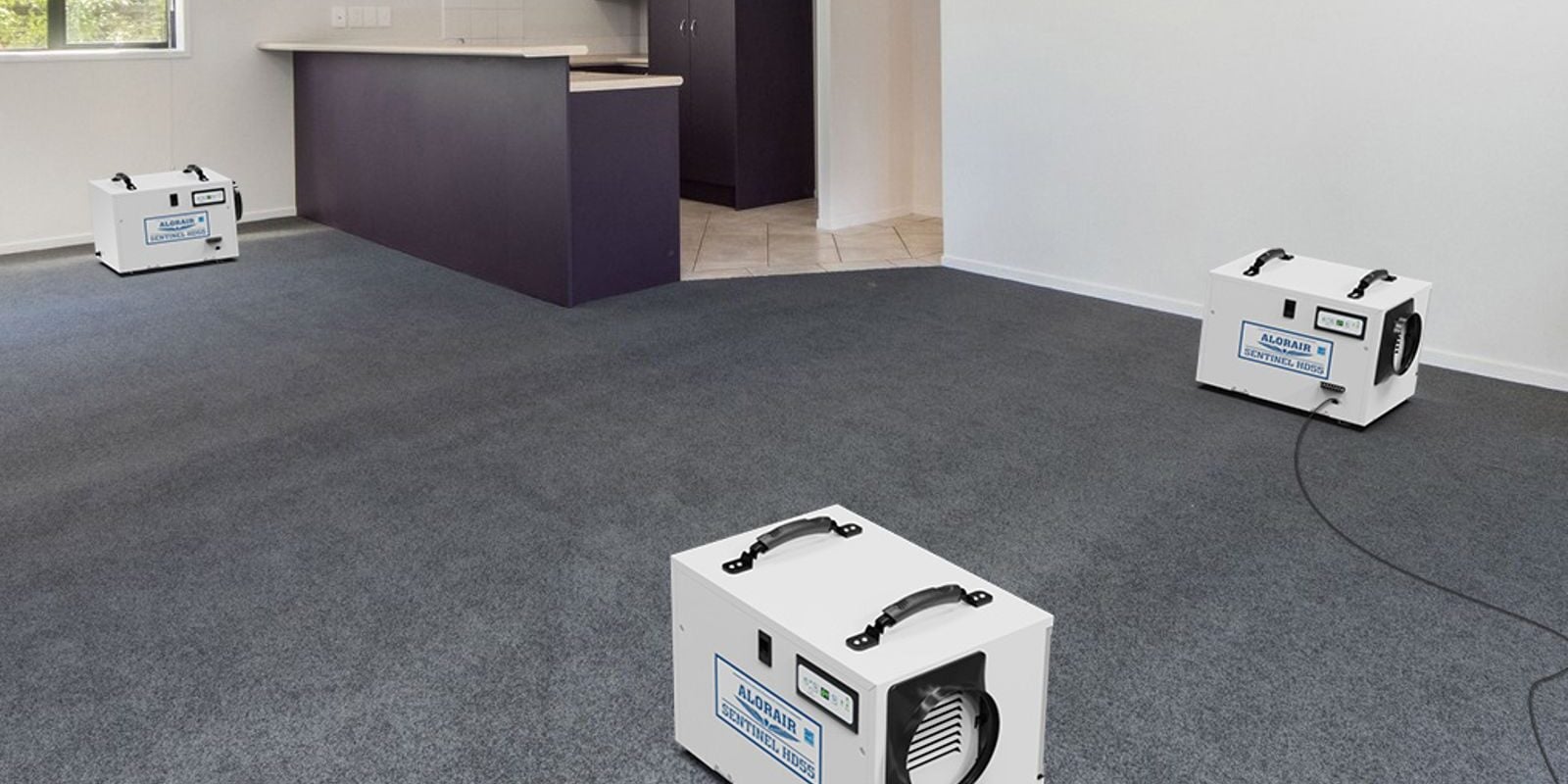
AlorairCrawlspace offers commercial-grade models, including the Sentinel and Helios series, built specifically for these harsher conditions. These units are designed to operate in the kind of tight, humid, low-light spaces where a household appliance would struggle. That distinction matters more than most buyers expect when comparing specifications on a label.
Drainage and Pump Installation Mistakes with Sentinel and Helios Models
Drainage is where many installations go wrong. Several Helios and Sentinel models, such as the Helios MP35 and Sentinel HD55P, are sold with a pump and drain hose included, which allows condensate to be moved away from the unit instead of pooling nearby. Skipping proper hose routing, or leaving a hose kinked under a low joist, can quietly undermine an otherwise solid setup.
Hanging kits are another detail that gets overlooked. AlorairCrawlspace sells a hanging kit compatible with its Sentinel and Galaxy dehumidifiers, including models like the Sentinel HD35P, Sentinel HD55 and HD55P, Sentinel HDi65, Sentinel HDi90, Sentinel HDi100/HDi120, and the Galaxy 60, 60P, and 85P. Suspending a unit off the ground with this kit reduces noise and vibration transfer to the floor above, and it adds height to help condensate drain properly.
Oversizing vs. Undersizing: Understanding PPD Ratings
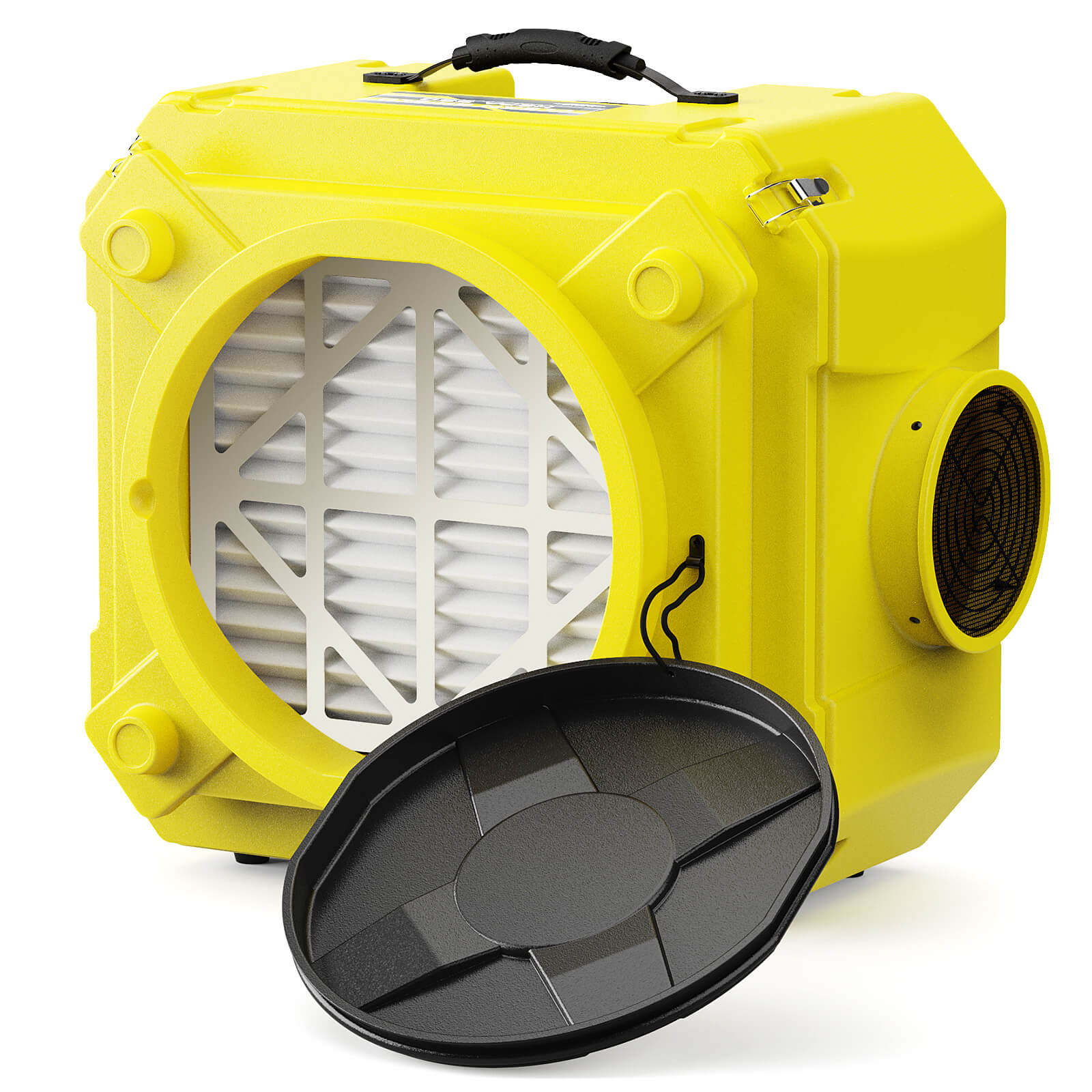
Pint-per-day, or PPD, ratings describe how much moisture a dehumidifier is designed to remove, and mismatching that rating to the square footage of a crawl space is a frequent error. The Helios MP35, for example, is rated at 70 PPD and sized for spaces around 1,000 square feet, while the Sentinel HD55P and Helios MP55 are rated at 120 PPD for spaces closer to 1,300 to 1,500 square feet. The Galaxy 60P is rated at 145 PPD for roughly 1,800 square feet, and the larger Galaxy 85P reaches 180 pints for spaces near 2,300 square feet.
Choosing a unit rated well below the actual square footage leaves excess moisture unaddressed, while oversizing can mean paying for capacity a smaller crawl space does not need. Matching the PPD rating to the actual footprint, rather than guessing, is one of the simpler ways to avoid common crawl space dehumidifier mistakes.
WiFi-Enabled Dehumidifiers: Beyond Remote Monitoring in the Sentinel HD Series
Several Sentinel models, including the Sentinel HD35P WiFi and Sentinel HD55 Blue WiFi, connect to the AlorAir-C app for remote access. This allows conditions in a crawl space to be checked without climbing down into it, which matters given how inaccessible these areas tend to be. A separate remote control accessory also exists, connecting via a 25-foot CAT 5 cable and pairing with compatible commercial dehumidifiers in a handful of steps.
Overlooking these monitoring options is itself a missed opportunity, since crawl spaces are rarely checked in person on a regular basis. A unit from AlorairCrawlspace that reports its status remotely makes it easier to catch a problem, such as a full tank or a drainage failure, before it causes further damage.
Vapor Barriers and Dehumidifiers: Why Both Matter for Long-Term Moisture Control
Running a dehumidifier without a vapor barrier is one of the most persistent crawl space dehumidifier mistakes, since ground moisture keeps evaporating upward and the unit is left fighting a constant supply of new humidity. AlorairCrawlspace sells vapor barrier sheeting in multiple thicknesses, including 6 mil, 10 mil, 12 mil, and 14 mil options, in various roll sizes. Pairing a sealed liner with a properly sized dehumidifier addresses both the source of moisture and its ongoing management.
Encapsulation materials and dehumidification equipment are often treated as separate purchases, but they serve complementary roles. A vapor barrier limits moisture entering from the soil, while a dehumidifier manages humidity already in the air. Skipping one while investing in the other leaves a gap in the overall moisture control strategy, which is exactly the kind of oversight that keeps a crawl space damp despite having equipment in place.
Maintenance Oversights That Reduce Dehumidifier Lifespan
Even well-chosen equipment underperforms if basic maintenance is ignored. Filters need regular checks, and drain lines need to stay clear of kinks or debris so condensate keeps moving away from the unit. Neglecting these small tasks is a quiet contributor to many crawl space dehumidifier mistakes that otherwise seem like equipment failures rather than upkeep gaps.
- Placing a dehumidifier directly on a dirt floor instead of hanging or elevating it is a common oversight that affects drainage and airflow.
- Selecting a unit based on room count rather than actual square footage and PPD rating often leads to under-performing humidity control.
- Assuming a single dehumidifier can cover a vented and an unvented section of crawl space equally is a frequent misconception.
- Overlooking the need for a dedicated drain hose or pump setup leads to standing condensate near the unit.
- Treating ventilation fans and dehumidifiers as interchangeable solutions ignores that they serve different purposes in moisture management.
None of these oversights are unusual, and most trace back to treating crawl space equipment the same way as a household appliance. The product range from AlorairCrawlspace, spanning the Sentinel, Helios, and Galaxy dehumidifiers alongside vapor barriers and ventilation fans, reflects how many separate decisions go into a functioning crawl space setup. Addressing drainage, sizing, monitoring, and sealing together, rather than one at a time, is what separates a lasting setup from a recurring problem.
Fixing these details early tends to matter more than any single piece of equipment.