
Barking Heads: Is Your Dog’s Food Right for Their Stage of Life?
The food your dog loved as a puppy probably should not stay in their bowl forever. Dogs change surprisingly quickly. The tiny puppy that once charged around the house all evening eventually becomes an adult with a more settled routine, and years later, you might find them choosing an afternoon nap over another lap of […]
The food your dog loved as a puppy probably should not stay in their bowl forever. Dogs change surprisingly quickly. The tiny puppy that once charged around the house all evening eventually becomes an adult with a more settled routine, and years later, you might find them choosing an afternoon nap over another lap of the park.
Their nutritional needs change along the way too.
It is easy to stick with familiar dog food simply because your pet enjoys it and appears healthy. But choosing food according to life stage can help provide the right balance of nutrition as their body, activity level and daily routine change. Barking Heads offers recipes for puppies, adults and senior dogs, making those transitions easier to manage.
Those First Months Are Doing a Lot of Work
Puppies seem to have two settings: completely asleep or running around as though someone has pressed fast-forward.
Behind all that energy, their bodies are developing rapidly. Bones are growing, muscles are developing and their brains are taking in an enormous amount of information. Puppy food is formulated with this period in mind, rather than simply being adult food served in smaller portions.
Protein is particularly important during growth, alongside an appropriate balance of fats, vitamins and minerals. Puppies also need enough energy to support development without being routinely overfed.
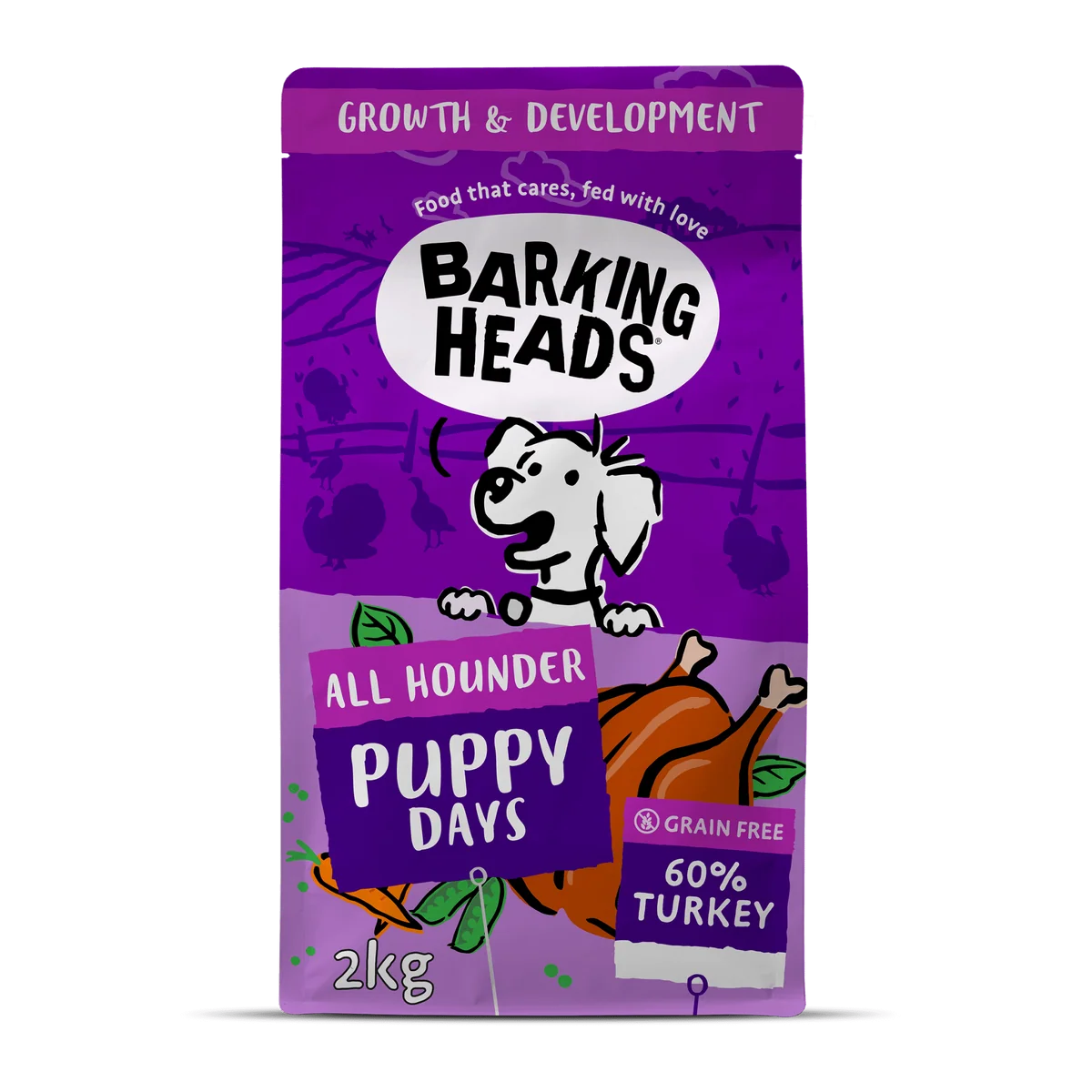
The puppy options from Barking Heads are designed specifically for this early stage, with recipes built around quality animal protein and other carefully selected ingredients.
Portion size matters here as well. A puppy enthusiastically finishing every meal does not necessarily mean the portion needs increasing. Feeding recommendations provide a useful starting point, while your puppy’s breed, expected adult size and activity should also be considered.
Adulthood Is About Finding a Comfortable Balance
Once growth slows, the feeding goal changes.
Adult dogs need enough energy for their lifestyle while maintaining a healthy body condition. This is where individual differences become much more obvious. A working dog spending hours outdoors will not necessarily need the same diet as a small companion dog whose daily adventures mostly involve a couple of walks and investigating the kitchen.
Good adult dog food should provide quality protein, appropriate fats, carbohydrates where included, fibre, vitamins and minerals in a balanced recipe.
There is also no single format that works for every household. Some dogs happily eat dry dog food, others prefer wet dog food, and mixed feeding can work well too.
Barking Heads has different adult recipes, including options based on chicken, lamb, salmon and other ingredients. That variety can be useful when considering taste preferences as well as individual dietary needs.
The important thing is not to keep changing food just because another bag looks interesting. If your dog has good digestion, steady energy, a healthy coat and maintains an appropriate weight, those are useful signs that their current diet suits them.
Then One Day, Your Dog Isn’t Quite So Young
There is rarely one dramatic moment when a dog becomes “senior.” You notice smaller things first.
Perhaps walks become a little slower. They sleep more. That endless enthusiasm for chasing a ball starts disappearing after the fifth throw instead of the fiftieth.
Ageing can change activity levels and nutritional requirements, so continuing with exactly the same portions and food without reconsidering them may no longer make sense. Senior dog food is designed with older dogs in mind, often balancing nutrition against a lifestyle that may now require fewer calories.
Barking Heads includes food specifically intended for older dogs, giving owners an option when it becomes time to move away from a standard adult recipe.
Age alone should not make every decision, though. Breed, body condition, health and activity all matter. A lively older dog may have very different needs from another dog of exactly the same age. If weight, appetite or health changes noticeably, your vet can help determine whether diet needs adjusting.
Don’t Rush the Change
Whenever it is time to move from puppy food to adult food, switch recipes or introduce senior food, avoid replacing the entire bowl overnight.
A gradual transition gives your dog’s digestive system time to adjust. Start by mixing a small amount of the new food with the familiar recipe, then gradually increase the proportion over several days.
It is a simple step, but it can make changing diets much easier.
The useful thing about choosing a range such as Barking Heads is that feeding can evolve alongside your dog rather than remaining fixed for life.
Your dog’s favourite sleeping spot may never change, and they may still come running whenever they hear a food bag open. What belongs in their bowl, however, deserves another look every few years. Feeding for the dog they are today makes far more sense than automatically feeding for the dog they used to be.