3D Memory Crystals vs 2D Ornaments Shape and Format Comparison at Beyond Memories
From faceted hexagons to wearable hearts, Beyond Memories turns photos into keepsakes shaped for every space. 💎
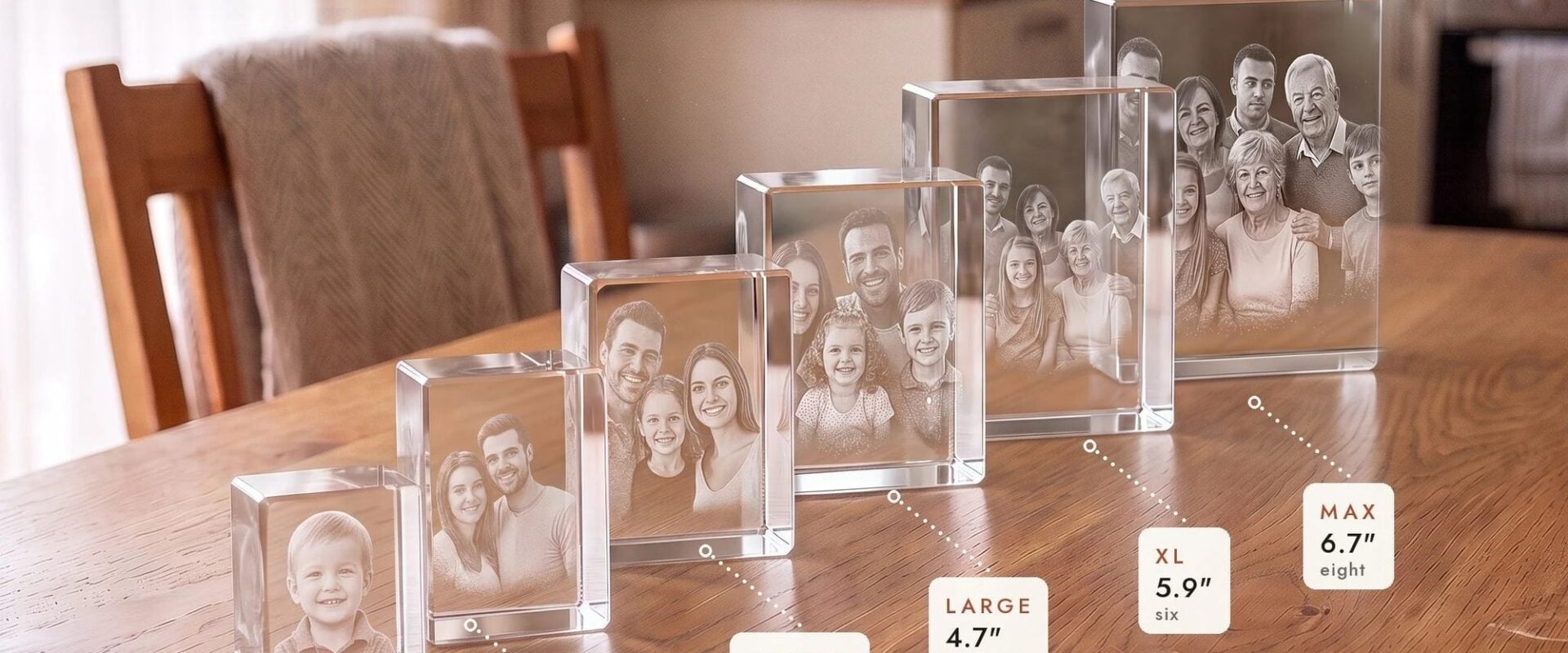
Selecting a 3D memory crystal shape or a flat 2D ornament often comes down to how a keepsake will be displayed and who will see it. Beyond Memories sells both formats, built on two different engraving methods, across a range of 3D memory crystals shapes and flat 2D designs. Understanding the difference helps match a shape and finish to a room, an occasion, or a person receiving the gift.
3D Memory Crystals: Tabletop Shapes and Display Options
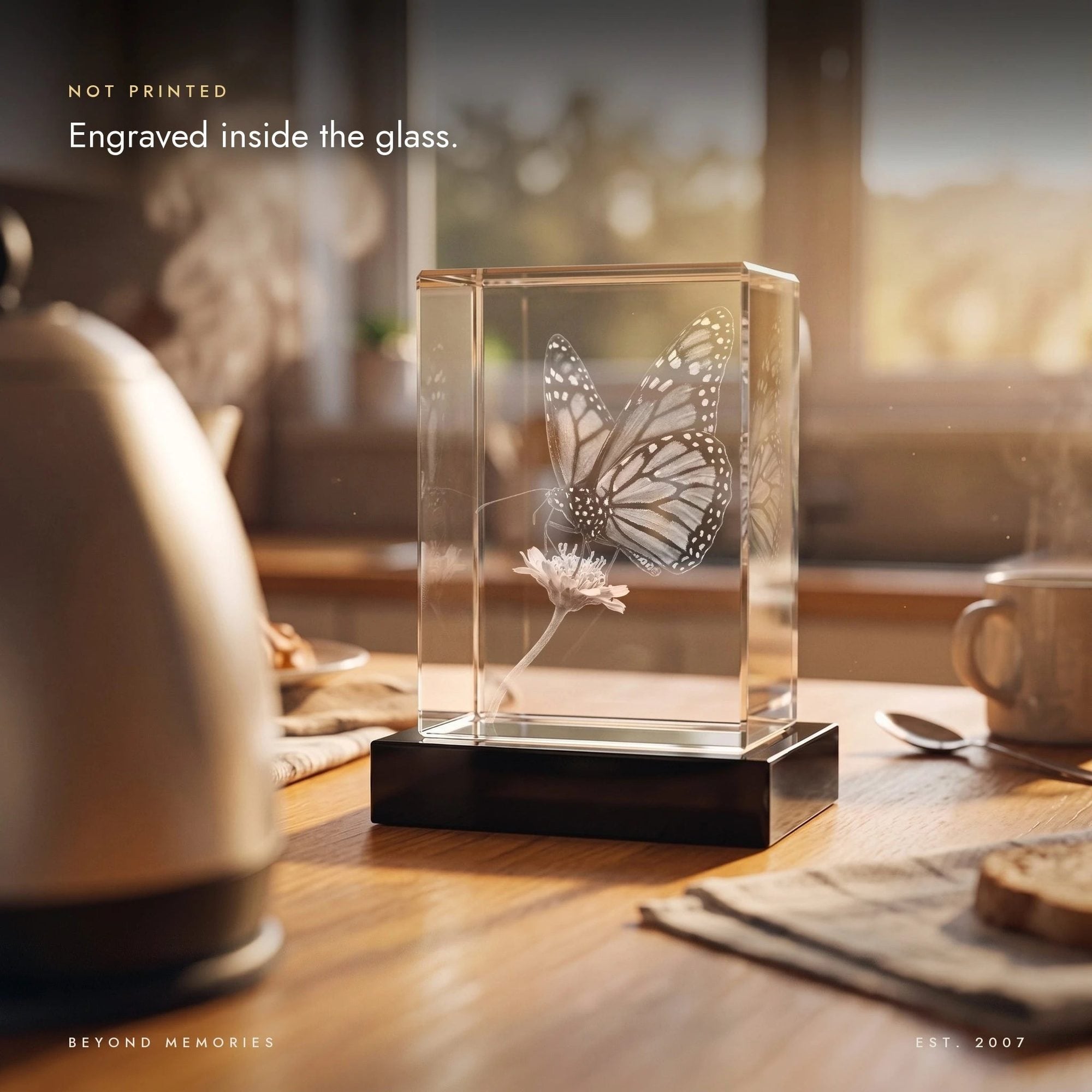
The tabletop line from Beyond Memories uses what the brand calls true 3D engraving, also known as subsurface laser engraving. A photograph is sculpted into a three-dimensional model first, then etched inside a block of optical crystal glass with a 4K laser. Every piece is hand-inspected in Henderson, Nevada, before it ships, which the brand positions against overseas print-farm production common among marketplace sellers.
That process places millions of microscopic engraving points inside the glass itself, which is what separates it from a flat surface print or a printed photo in a frame. The rectangle, heart, square, cube, hexagon, candle holder, and arc all use this same subsurface method. Each of these 3D memory crystals shapes simply changes how the engraved image sits and catches light on a shelf or desk.
2D Memory Crystals: Ornaments and Wearable Formats
Alongside the tabletop collection, Beyond Memories also produces a 2D Memory Crystal line, which relies on surface etching rather than internal laser work. These pieces come as ornaments, including bone, heart, and circle shapes, as well as necklaces like the 2D Memory Crystal Heart Necklace. They are built for hanging on a tree, clipping to a bag, or wearing close to the body, rather than standing on a tabletop.
Because the engraving sits on the surface instead of inside the glass, these pieces tend to be smaller and lighter than the tabletop crystals. They often appear bundled into gift sets, such as a heart ornament paired with a circle ornament and a holiday card. The 2D format fills a portable, wearable role within the broader catalog rather than a display role.
Rectangle, Heart, Square, and Cube: Comparing the Core Shapes
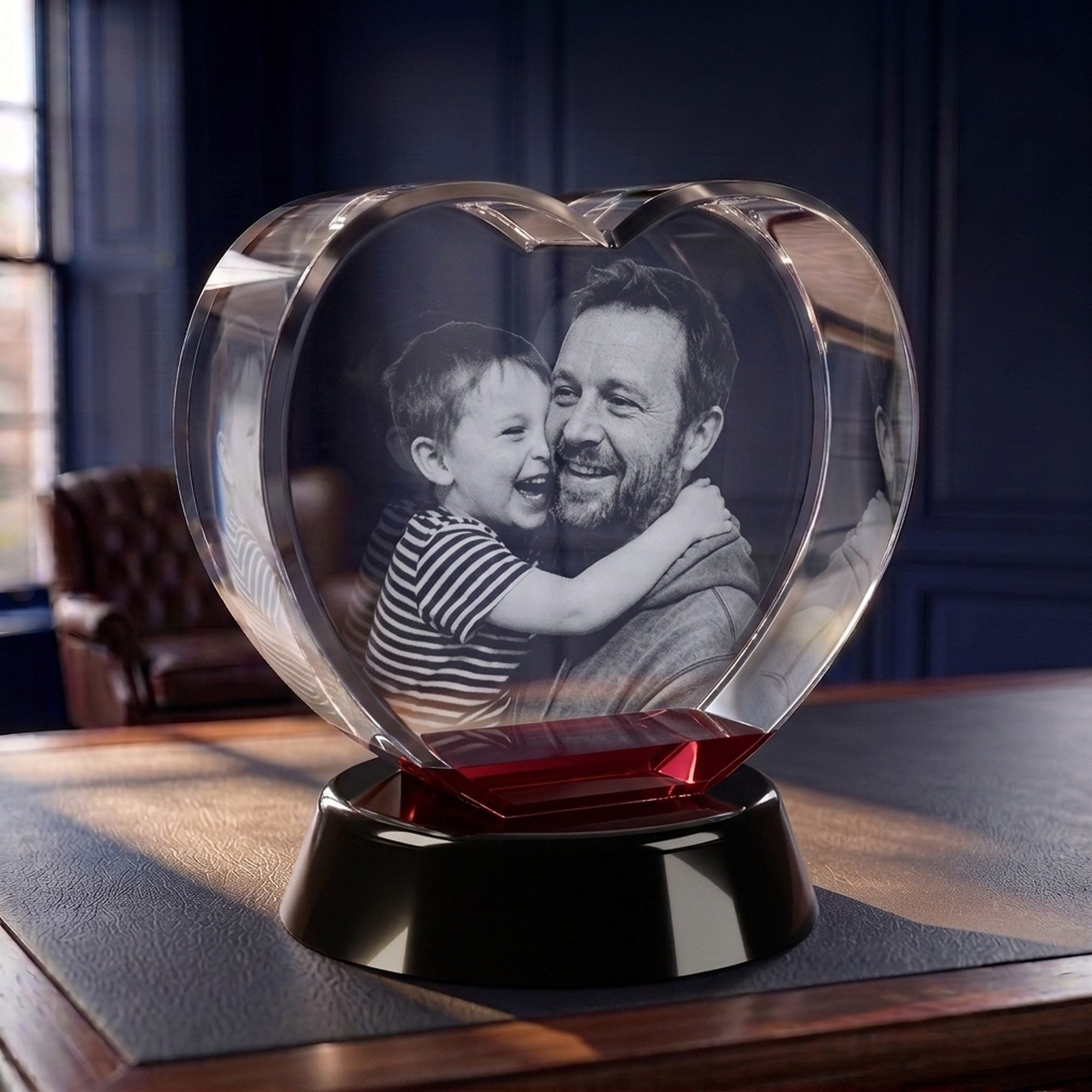
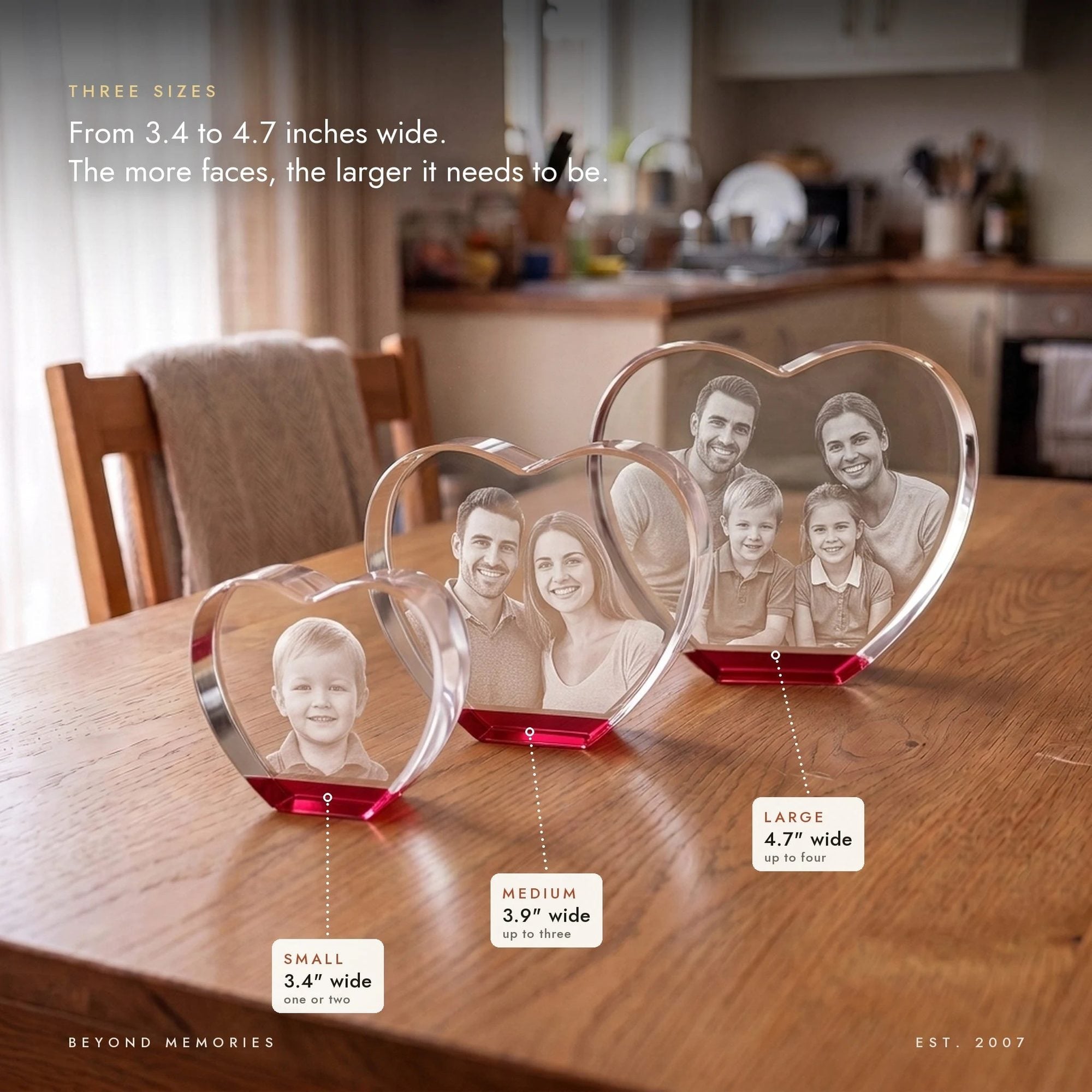
Among the 3D memory crystals shapes, the rectangle is described as the classic choice for portrait photos, handling full-face shots and vertical compositions. The heart shape is framed around anniversaries, weddings, and memorial keepsakes, sitting naturally on a desk or nightstand. Both are part of the tabletop collection and use the same subsurface engraving process.
The square version offers a block of optical crystal with sharp 90-degree edges, which the brand markets as a modern centerpiece for any room. The cube stands apart because it is viewable from every angle, turning a single favorite photo into a keepsake without one fixed front side. Square and cube both draw attention through their geometry as much as through the image engraved inside.
Placement often guides which shape fits a given space, and that placement decision also shapes which photo works best inside it. A close vertical portrait suits the rectangle, while a symbolic or romantic image fits the heart more naturally. A cube or square, meanwhile, suits a photo meant to be picked up and turned around rather than viewed from one fixed angle.
The Hexagon and Candle Holder: Premium and Specialty Formats
The hexagon is described by Beyond Memories as the prestige shape in its collection, a six-sided block of optical crystal that catches light from multiple angles because of its faceted geometry. The brand notes it is the most-requested shape for retirement gifts and corporate occasions. Its six-sided structure gives it a different visual presence on a shelf than the flatter rectangle or square.
The candle holder format takes a different approach, built to be lit from within rather than simply displayed under ambient light. There is also the Jeweled Edition, a heart-shaped 3D Memory Crystal with a colored glass base fused directly into the piece, offered in Sapphire, Emerald, Amber Gold, and Ruby finishes. The colored base is described as part of the crystal itself rather than a separate stand, with the same engraving process used across the rest of the collection.
Memory Light Bases: Enhancing Crystal Display and Depth
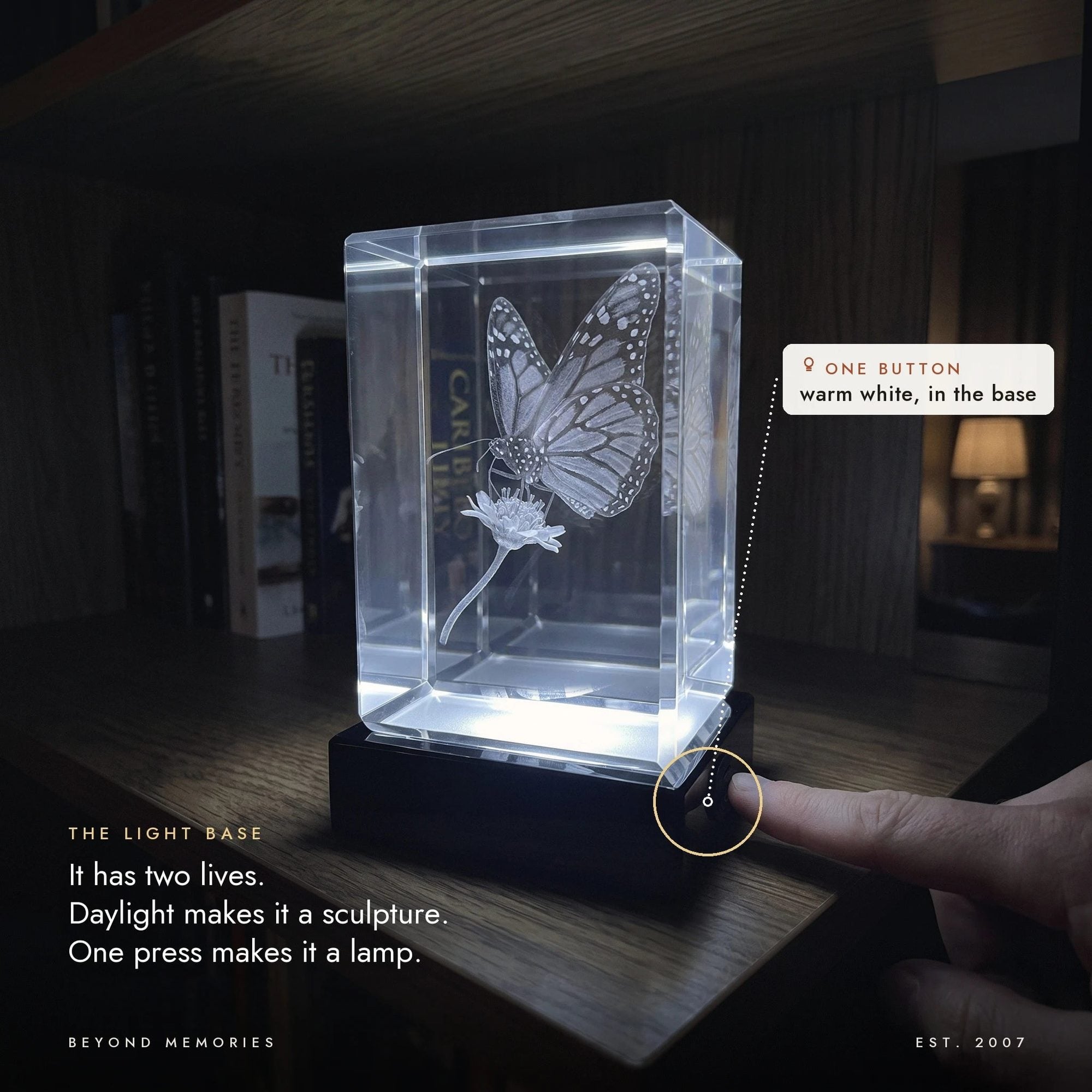
Several of the 3D memory crystals shapes pair with a separate Memory Light Base, a wooden stand built to illuminate the engraving from below. The Essentials Wood Small base uses a warm-white LED that fires through a centered dispersor, lifting the engraving out of shadow. Larger options, including a Premium Wood Small and a Premium Wood XL, extend the same idea with brighter illumination for bigger crystal pieces.
A light base does not change the engraving itself, but it changes how visible the fine detail becomes in a dim room. Gift sets such as the Portrait Gift and Glow Gift already bundle a rectangle crystal with a light base, pairing the tabletop piece with its stand from the start. For anyone assembling pieces individually, a base can be matched separately to whichever shape was chosen.
- 3D tabletop crystals come in rectangle, heart, square, cube, hexagon, candle holder, and arc shapes, each engraved with subsurface laser technology inside optical crystal glass.
- 2D Memory Crystal ornaments, including bone, heart, and circle designs, are built for hanging display rather than tabletop placement.
- 2D Memory Crystal necklaces offer a wearable format using the same surface-etched engraving as the ornaments.
- The Jeweled Edition heart crystal adds a fused colored glass base in Sapphire, Emerald, Amber Gold, or Ruby to the standard 3D engraving process.
- Memory Light Bases, available in Essentials and Premium Wood options, are designed to illuminate an engraved crystal from below.
- Pre-built gift kits combine a tabletop crystal, a light base, and multiple ornaments for those wanting several formats together.
When to Choose 3D Engraving Over 2D Surface Etching
The core difference between the two formats comes down to where the image sits in the material. 3D subsurface engraving places the photo inside the crystal, giving it a dimension that flat surface etching, used on the ornament and necklace lines, cannot achieve since that method keeps the image on the outer face of the piece instead.
That structural difference tends to guide the choice more than personal taste alone. A tabletop piece meant to anchor a shelf or mantle benefits from the depth of 3D memory crystals shapes like the rectangle, hexagon, or cube. A piece meant to travel on a keychain, hang on a tree, or sit around a neck leans toward the lighter, flatter 2D format that Beyond Memories also offers.
Occasion matters too. The hexagon and Jeweled Edition heart are positioned toward milestone events such as retirements, anniversaries, and significant birthdays. Ornaments and necklaces, by contrast, show up more often in holiday-themed gift kits, suggesting a more everyday or seasonal role within the same overall collection.
Across both formats, the same hand-inspection standard applies before anything ships from the Henderson, Nevada, facility. Whether the final piece is a faceted hexagon or a small circle ornament, that inspection step stays consistent across the catalog. That shared production detail sits underneath the visible differences in shape, size, and engraving method.
In the end, the two formats answer different questions about where a memory belongs, on a shelf or close to the body.