2-Piston vs. 4-Piston Hydraulic Brakes STAR UNION’s eBike and MTB Disc Brake Lineup Compared
From 2-piston parking brakes to 4-piston downhill power, STAR UNION's hydraulic disc brake lineup covers eBikes, eTrikes, and MTBs alike. 🚲
Replacing a worn brake set on an electric bicycle, trike, or mountain bike usually starts with one practical question: how much clamping force does the caliper actually need? A hydraulic disc brake comparison across the STAR UNION eBike and MTB lineup turns up a mix of calipers, cut-off wiring, and rotor sizes built for different platforms. This overview walks through the main architectures, starting with what separates 2-piston from 4-piston designs.
Understanding 2-Piston vs. 4-Piston Hydraulic Disc Brake Architecture
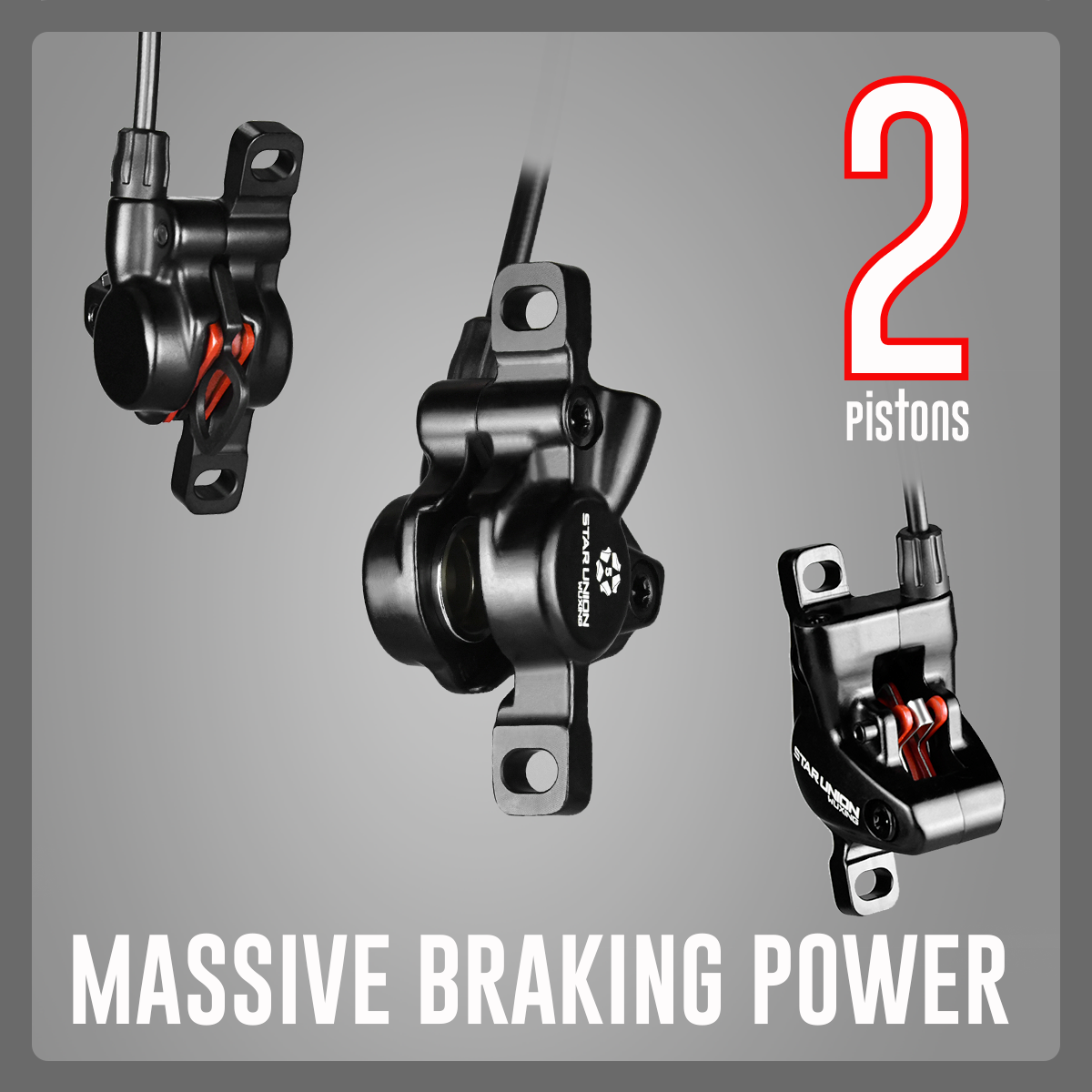
A 2-piston caliper uses two pistons to press brake pads against a rotor, while a 4-piston caliper adds extra clamping surface for more stopping force. In a hydraulic disc brake comparison, piston count is usually the first spec riders check, because it signals how the brake is meant to be used. The lineup covers both types, from city bike sets to mountain bike calipers. Rotor size and hose length also factor into the comparison, since a 160mm rotor behaves differently under load than a 180mm rotor.
Mineral oil fill is a shared trait across these hydraulic lines, which matters when planning maintenance. The lineup is explicit that its systems run on mineral oil rather than DOT fluid, and that the two fluids should never be mixed. That distinction carries through every model discussed below, regardless of piston count.
The STAR UNION 240PYD: Dual-Piston Braking for eBikes with Motor Cut-Off
The STAR UNION 240PYD is a dual-piston hydraulic disc brake set built as a reliable replacement for select Lectric eBikes originally fitted with its 602 brakes. It uses 2-pin motor cut-off connectors, which link the brake lever to the motor controller so power cuts when the lever is pulled. The set arrives pre-bled, which simplifies installation for anyone swapping out a worn factory brake.
Because it targets a specific replacement use case, the 240PYD is narrower in scope than some of the other eBike sets in the range. It still delivers the smooth braking feel associated with dual-piston calipers, just without the parking lock found on other models. Riders comparing options for direct eBike replacement parts will likely see this listed among the bestselling eBike brakes, and it is also sold as a complete kit for buyers who want hoses and hardware bundled together.
The STAR UNION 150PYDZ/2: Hydraulic Braking with Integrated Parking Lock
The 150PYDZ/2 line appears across both eBike and eTrike configurations, and it stands out for combining hydraulic braking with a built-in parking lock. For eTrikes, the set includes left-front and right-rear hydraulic brakes, LP16 ceramic pads, and two 180mm x 2.3mm rotors. The parking lock lets the brake hold the vehicle steady while parked, a feature specific to this line rather than the entire catalog.
On the eBike side, STAR UNION mirrors the trike’s 2-piston calipers and parking function while swapping in 2-pin motor cut-off connectors suited to an eBike controller, and the set also ships as a bundled kit for buyers assembling a full install rather than sourcing parts separately. That dual-piston design gives the 150PYDZ/2 a different character than the 4-piston sets built for trail riding, since it leans toward stability at a stop rather than maximum force on a descent.
The STAR UNION 220PYD Pro: 4-Piston Power for eBike and Downhill Control
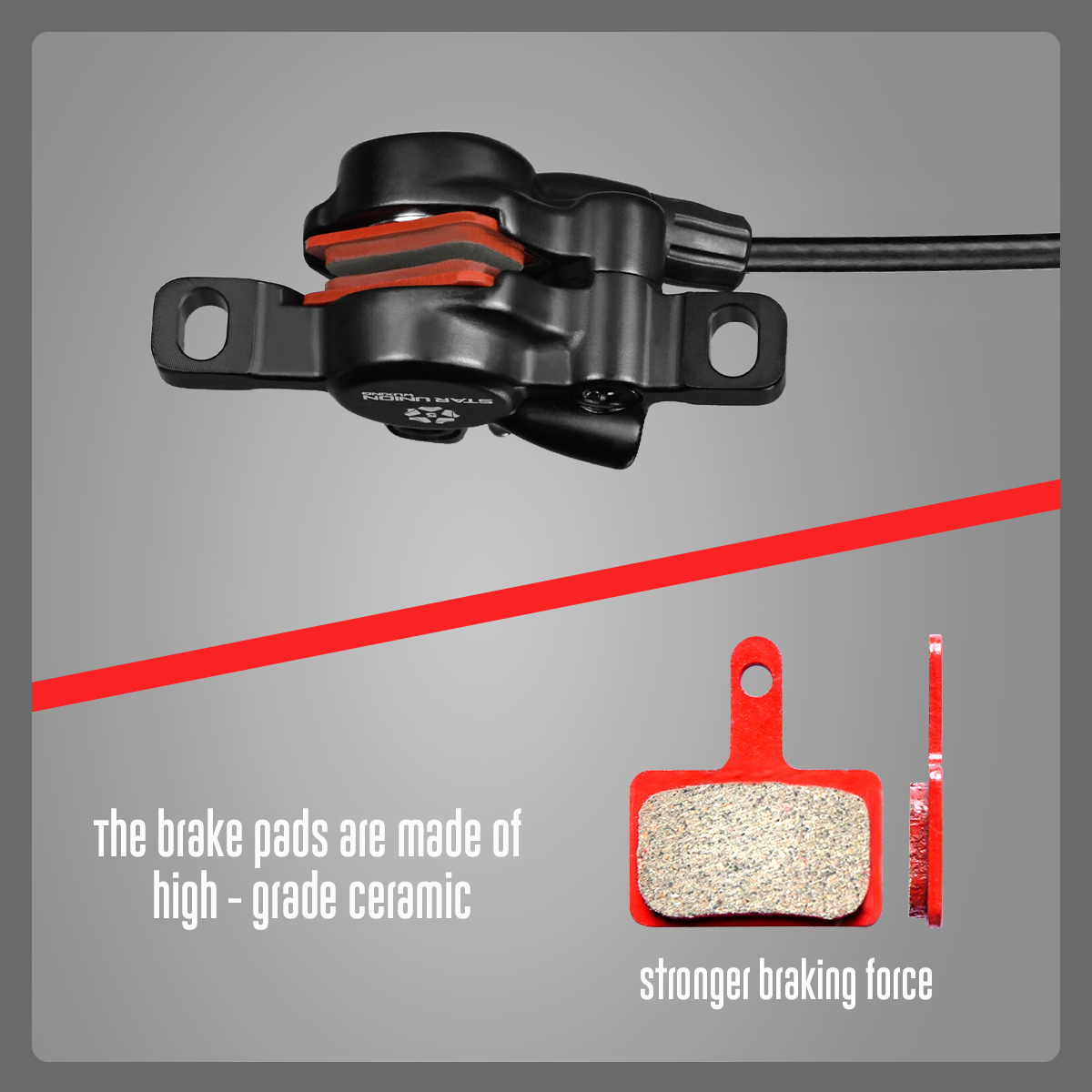
The STAR UNION 220PYD Pro moves into 4-piston territory, built for eBike riders who want more braking power on everyday rides and on downhill sections. It pairs 4-piston calipers with ceramic brake pads and 2-pin motor cut-off connectors, and the front and rear lines come pre-filled with mineral oil so the set is ready to bleed-check rather than fill from scratch. Unlike the 150PYDZ/2, the 220PYD Pro does not advertise a parking lock, since its focus sits on braking force rather than static hold.
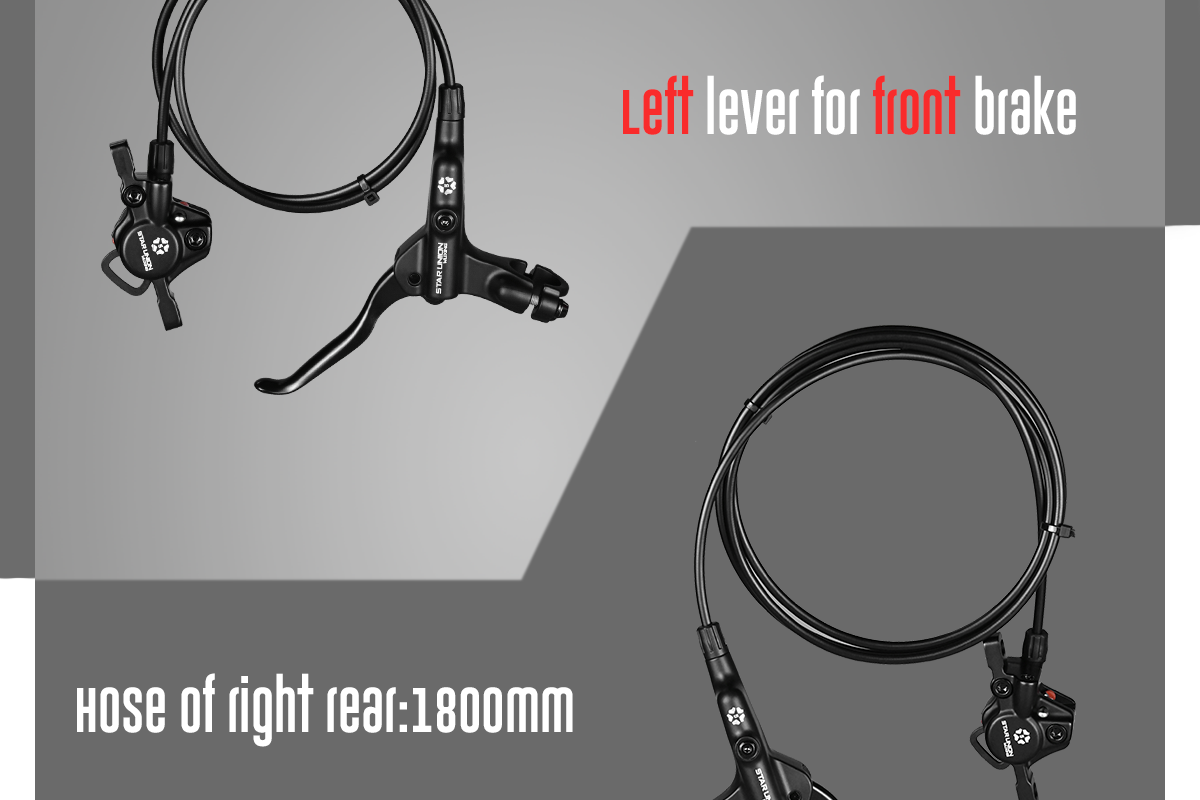
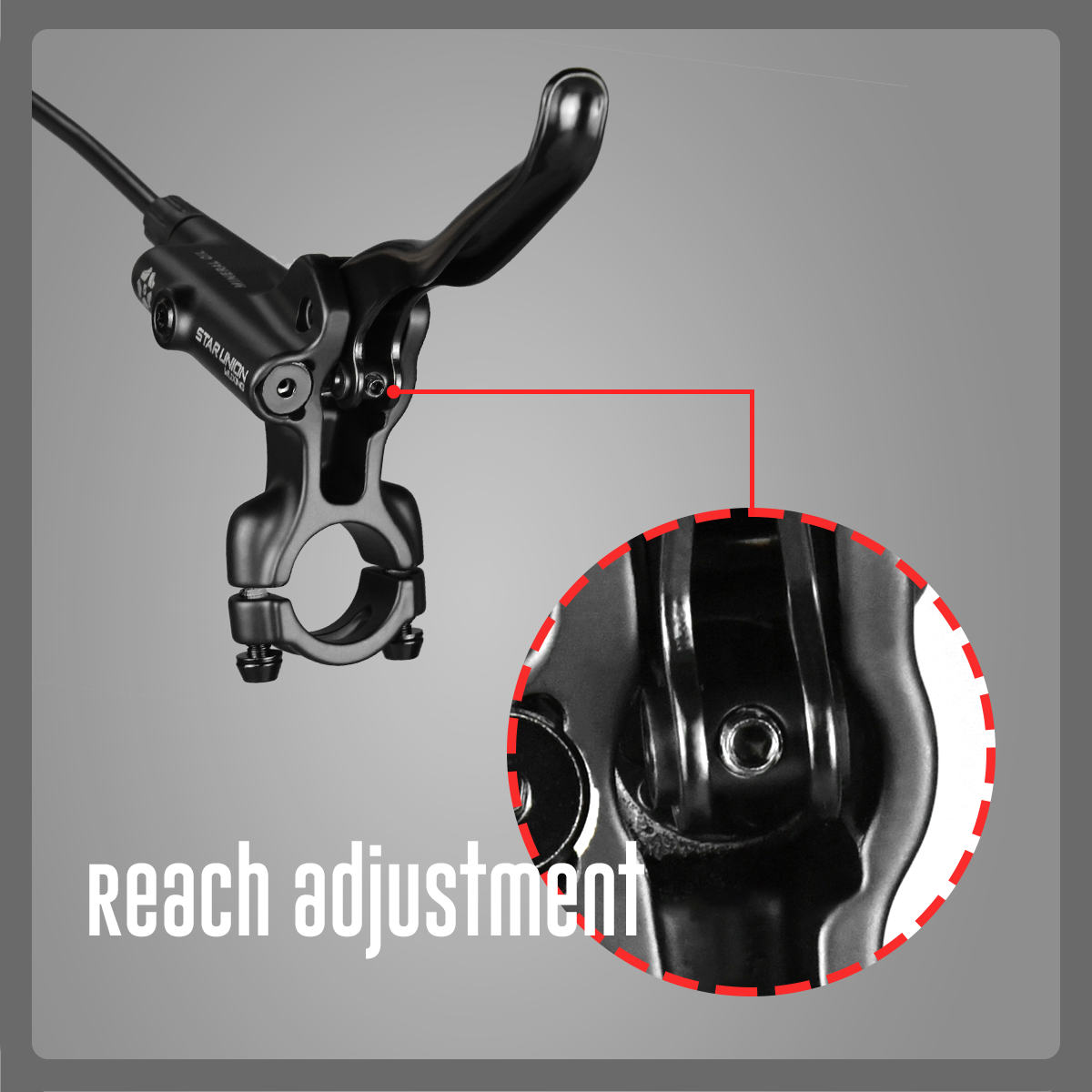
A separate 220PY Pro model, built for mountain bikes rather than eBikes, also uses forged 4-piston calipers alongside adjustable two-finger brake levers. That version comes as a front and rear set with a mineral oil pre-fill and defined hose lengths for the front and rear lines. Between the two 220-series brakes, the eBike variant carries the motor cut-off wiring while the MTB variant is built around adjustable lever reach instead.
Hydraulic Disc Brake Selection by Riding Type and Vehicle
Comparing hydraulic disc brakes across riding types starts with matching features to how the vehicle is actually used. An eBike with a motor controller gains from 2-pin cut-off wiring, a trike parked on an incline gains from a parking lock, and a commuter city bike like the 240PY can run a simpler forged 2-piston setup without either feature. A mountain bike built for descents leans toward 4-piston calipers for added clamping force, where the extra pistons spread braking force across more pad surface.
The following points summarize the practical differences that separate the various hydraulic brake lines offered by STAR UNION.
- The 240PYD and 150PYDZ/2 use 2-piston calipers, while the 220PYD Pro and 220PY Pro use 4-piston calipers.
- The 240PYD, 150PYDZ/2, and 220PYD Pro all include 2-pin motor cut-off connectors for eBike or eTrike motor integration.
- The 150PYDZ/2 line is the one built around an integrated parking lock, across both eBike and eTrike versions.
- The 221PYDJZ eTrike brake adds an integrated oil cup with mirror mount alongside its parking lock and mirrored calipers.
- Rotor compatibility varies by model, with the 150PYDZ/2 eTrike kit supplying 180mm x 2.3mm rotors and the 240PY city bike brake supporting 160mm and 180mm rotors.
Maintenance and Compatibility Across STAR UNION Brake Models
Keeping a hydraulic system running smoothly means occasional bleeding to clear trapped air and refresh the mineral oil inside the lines. STAR UNION addresses this with the BYGJ bleed kit, built to service both 2-piston and 4-piston systems across the lineup. The kit includes a fluid injector, transparent hoses for monitoring air bubbles, and metal connectors sized for compatible bleed ports.
Brake pads are another area where compatibility differs by model, since pad options are organized by code rather than by bike type. Pads such as the LP-12/LP-16/LP-18 and LP-21/LP-22/LP-23 series correspond to specific caliper families, so matching the pad code to the installed brake matters more than matching it to the bike itself. This kind of hydraulic disc brake comparison between pad series helps clarify which replacement part fits which caliper before ordering.
Mounting adapters are available for several of the city and eBike brake sets, which helps when a frame or fork calls for a rotor size different from the one included in the box. Across the range, the shared use of mineral oil, pre-bled hoses, and ceramic pads gives the various lines a degree of consistency even as piston count and parking features change from model to model.
Piston count, cut-off wiring, and parking locks each answer a different need, and that distinction is what makes picking the right hydraulic disc brake a matter of vehicle type first.