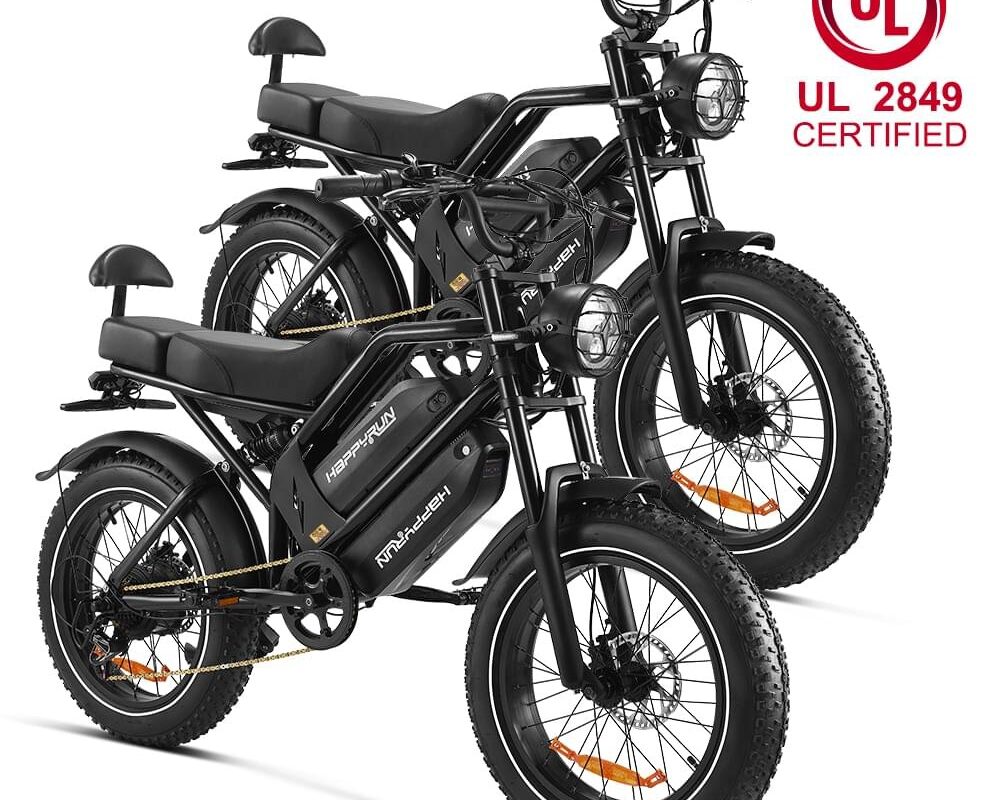
The Grocery Run Just Got Horsepower: HappyRun Electric Cargo Bikes for Everyday Hauling
A bicycle becomes a very different proposition once you ask it to carry groceries, work gear, shopping and possibly another passenger without turning every hill into a personal fitness challenge. That is exactly where the electric cargo bike collection from HappyRun comes in. The current range centres on the G70 family, including the road-friendly G70 […]
A bicycle becomes a very different proposition once you ask it to carry groceries, work gear, shopping and possibly another passenger without turning every hill into a personal fitness challenge. That is exactly where the electric cargo bike collection from HappyRun comes in. The current range centres on the G70 family, including the road-friendly G70 and considerably more powerful G70 Pro. Both combine dual batteries, fat tires, full suspension and a cargo-oriented frame, but they target different riders. The G70 prioritises practical everyday transportation with a 750W motor and 20 mph top speed, while the G70 Pro uses a dual-drive system with substantially higher peak output. If the goal is replacing some short car journeys rather than simply owning another recreational bike, HappyRun’s cargo models make an interesting case.
HappyRun G70 turns errands into actual bike journeys
The standard HappyRun G70 is the sensible starting point for shoppers interested in everyday cargo use. Its current UL 2849-certified configuration uses a 750W motor, dual 48V 13Ah batteries and a claimed maximum range of up to 85 miles under suitable conditions. Total payload is rated at 330 pounds, while the optional rear rack is rated for 50 pounds. HappyRun also equips the G70 with two seats, and the passenger seat can be replaced with a cargo rack depending on how you intend to use the bike. That versatility is useful for grocery runs, commuting and carrying everyday gear without buying a machine designed solely for one job. The G70 is still a substantial 98-pound bike, though, so anyone planning to carry it upstairs should reconsider that particular workout before checkout.
Dual batteries make the HappyRun G70 interesting for longer errands
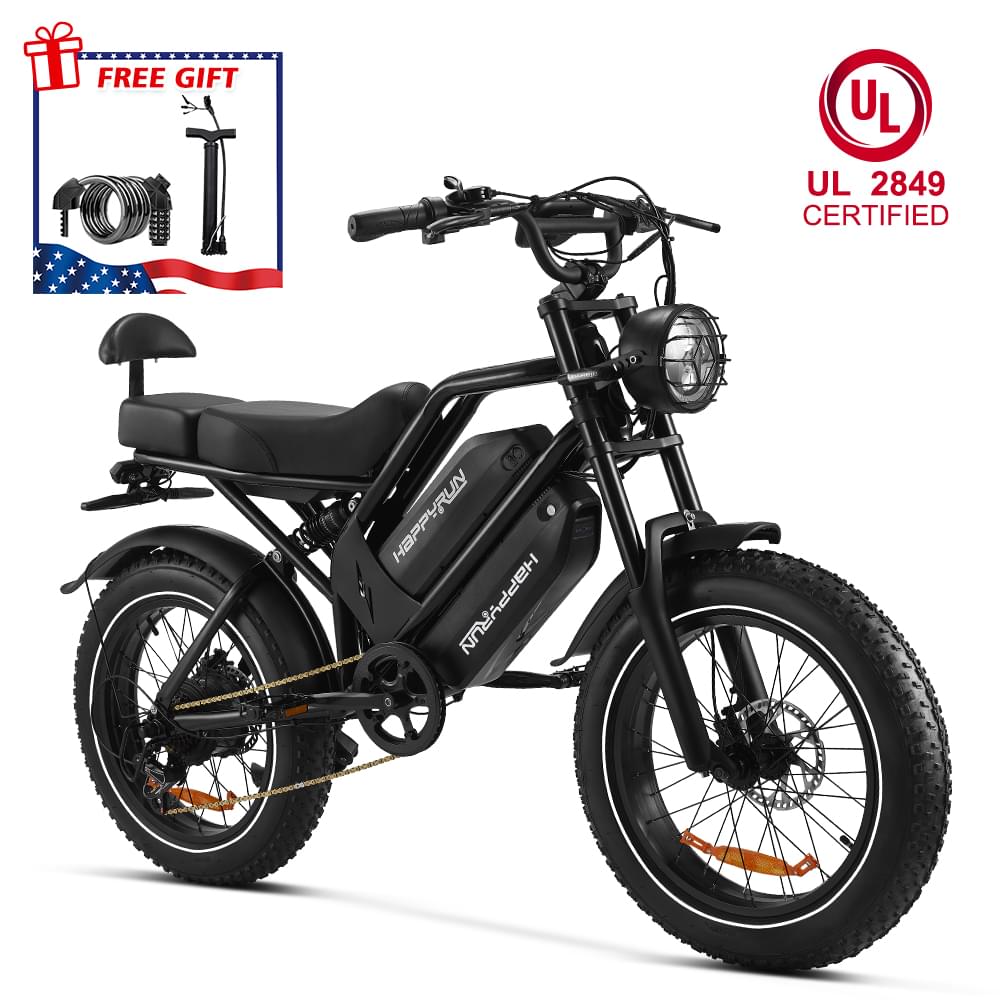
Battery capacity becomes particularly important on a cargo bike because additional weight can affect how much assistance you need, and HappyRun addresses that with a dual-battery setup. The current G70 uses two 48V 13Ah lithium batteries for 26Ah combined capacity, with the brand advertising up to 85 miles of maximum range. Real-world distance will vary considerably with rider and cargo weight, terrain, temperature, speed and assistance level, so that figure should be treated as an upper-end reference rather than a guaranteed commute. The practical benefit is having more battery capacity available for days involving several stops or longer routes. Someone using a cargo bike to replace short car journeys may value that flexibility more than maximum speed. Nobody wants to leave the supermarket with several bags of groceries and discover the final journey home has unexpectedly become leg day.
HappyRun G70 Pro adds serious power for hills and heavier-duty riding
The G70 Pro takes the same general cargo-bike idea and gives it considerably more muscle. HappyRun currently specifies a dual-drive system with 5000W total peak output, dual 48V batteries providing 33Ah combined capacity and a maximum advertised speed of up to 36 mph. Total payload remains 330 pounds, while the bike itself weighs around 101 pounds. This makes the Pro particularly interesting for riders facing steep terrain or wanting stronger acceleration and pulling capability. It is not automatically the better everyday choice, however. More power can mean greater energy consumption, extra complexity and additional legal considerations. Depending on location and configuration, a high-powered electric bike may not qualify for the same public-road or cycle-path rules as a conventional e-bike. Check local regulations before assuming all 5000 peak watts are welcome on the morning commute.
HappyRun cargo bikes combine fat tires with full suspension
Cargo changes how a bicycle behaves, which makes stability and comfort particularly important. Both current G70 configurations from HappyRun use 20 x 4-inch tires and full suspension, helping the bikes deal with rougher streets and uneven surfaces while carrying additional weight. Smaller-diameter fat tires also help keep the overall platform relatively manageable while providing a substantial contact patch. The trade-off is that fat tires, suspension components and a heavy-duty frame contribute to the bike’s significant overall weight. This is not the ideal format for someone who regularly carries a bicycle onto public transport or hangs it vertically in a tiny hallway. It makes much more sense for riders with ground-level storage who value stability and utility. Cargo bikes are essentially the estate cars of cycling. Nobody buys one because it slips effortlessly into an overhead locker.
Hydraulic brakes matter when the bike is carrying more than you
Stopping equipment deserves as much attention as motor output on an electric cargo bike, and HappyRun equips both the G70 and G70 Pro with front and rear hydraulic brakes and 160mm rotors. That is particularly relevant when the combined weight of bike, rider and cargo becomes substantial. Both models also feature brake lights, while front and rear turn signals can make intentions clearer around traffic. The G70 additionally carries UL 2849 certification, meaning its electrical system has been evaluated against an established e-bike electrical safety standard by an independent testing organisation. Buyers should still perform routine brake, tire and battery checks, especially when regularly carrying loads. Electric assistance makes moving weight easier; physics remains stubbornly involved when you want all that weight to stop again.
HappyRun G70 can carry shopping without becoming a delivery van
The practical appeal of the HappyRun G70 is that its cargo capability does not require an enormous long-tail platform. The bike is available with a rear rack option rated for 50 pounds, and its passenger seat can be swapped for cargo-carrying equipment. That gives owners flexibility to configure the rear area around groceries, bags or everyday gear. The 330-pound total payload rating provides useful capacity, but riders need to remember that this figure includes the rider and everything carried on the bike rather than representing 330 pounds of shopping space. Suitable racks, baskets and accessories should also be securely fitted and used within their individual load limits. For everyday errands, that is still plenty of flexibility. Your weekly shop may finally have its own transport plan that does not involve locating the car in a crowded supermarket parking lot.
HappyRun G70 vs G70 Pro comes down to practicality or power
The easiest way to choose between the two main HappyRun cargo bikes is to decide whether your priority is straightforward utility or maximum performance. The G70’s 750W motor, 20 mph top speed and UL 2849-certified electrical system make it the more natural choice for everyday riders primarily interested in errands, commuting and longer recreational trips. The G70 Pro’s dual motors and 5000W peak output make more sense for riders dealing with demanding hills or wanting much stronger performance. Both offer dual batteries, full suspension, hydraulic brakes and a 330-pound total payload. The Pro is not necessarily an upgrade everybody needs. For ordinary urban errands, the G70’s lower-powered configuration may actually be the more logical ownership experience. Sometimes the mature buying decision is admitting that your groceries have never requested 5000 watts.
Who should choose a HappyRun electric cargo bike?
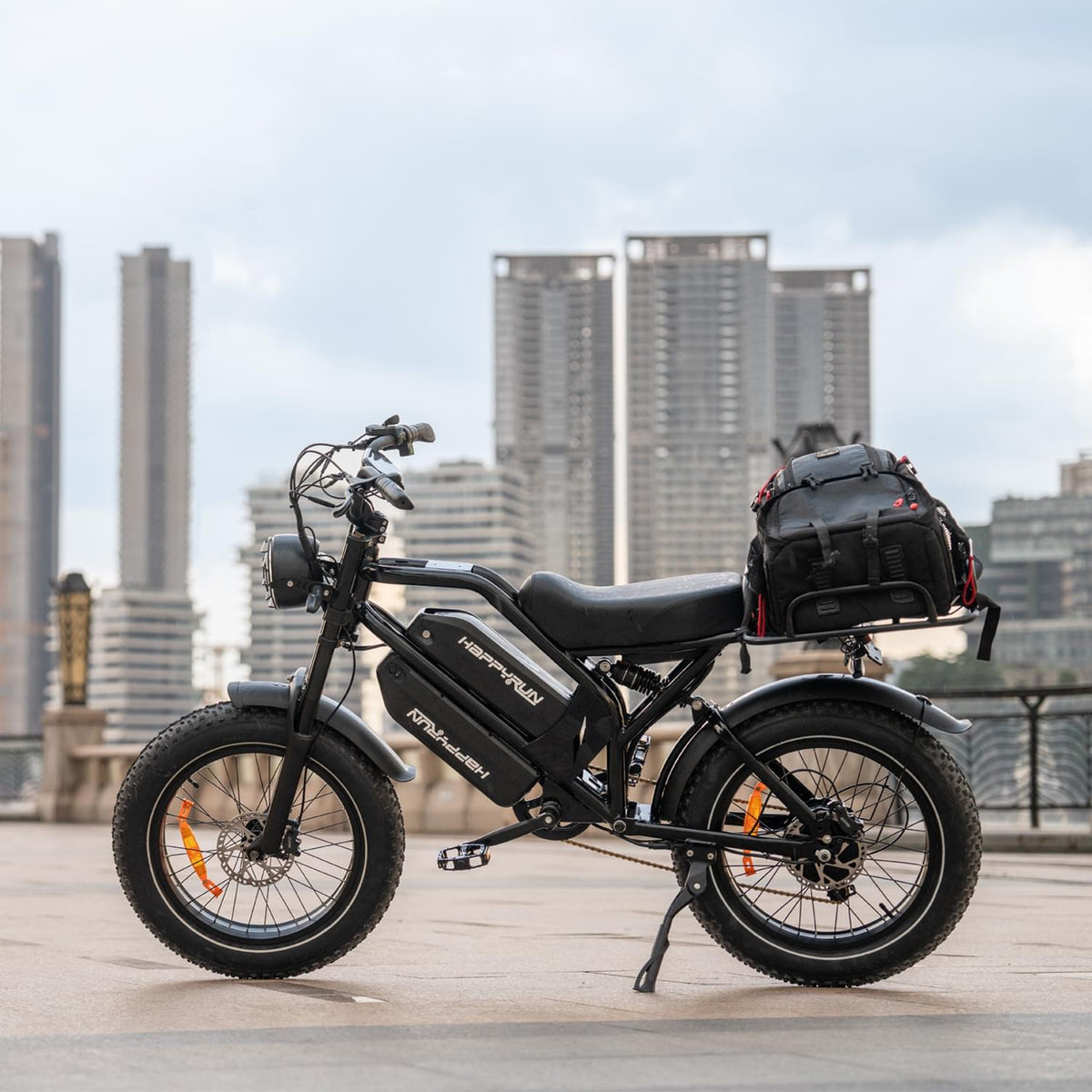
HappyRun electric cargo bikes are best suited to riders who want to replace some car journeys while retaining the flexibility to carry useful loads. The G70 is particularly appealing for grocery trips, commuting and general utility, while the G70 Pro targets riders wanting substantially greater power for more demanding terrain. Both require appropriate storage because their roughly 100-pound weights make frequent lifting impractical. Families considering passenger use should check compatible seating equipment, passenger guidance and local regulations carefully before riding, while all buyers should confirm the rules governing motor power, throttles and speed where they live. Riders seeking a lightweight commuter for mixed bike-and-train journeys should probably look elsewhere. But if the daily problem is transporting more stuff without automatically reaching for car keys, the cargo format starts looking very clever indeed.
Your Grocery Bags Just Lost Their Excuse for Taking the Car
The strongest argument for a cargo e-bike from HappyRun is not spectacular speed; it is making ordinary journeys easier to complete on two wheels. The G70 combines dual batteries, a 330-pound total payload rating, hydraulic brakes, full suspension and adaptable rear carrying space in a package aimed squarely at practical transportation. The G70 Pro adds far more motor power for riders who genuinely need stronger performance, although its capabilities also make local regulations especially important. For most everyday cargo buyers, the standard G70 is the more balanced starting point, while demanding terrain gives the Pro a clearer reason to exist. Either way, measure your storage space, calculate the loads you actually carry and think about your regular routes before ordering. Get those decisions right and the humble grocery run may become one of the few household chores you volunteer to do.