
What Can AlphaBiolabs DNA Testing Actually Tell You About Your Family?
Families are complicated. Sometimes the questions are emotional, sometimes practical, and occasionally they are important enough that guessing simply is not an option. A question about paternity, a biological relationship, or family connections can sit in the background for years before someone decides they finally want a clear answer. DNA testing has made it possible […]
Families are complicated. Sometimes the questions are emotional, sometimes practical, and occasionally they are important enough that guessing simply is not an option. A question about paternity, a biological relationship, or family connections can sit in the background for years before someone decides they finally want a clear answer.
DNA testing has made it possible to investigate many of these relationships using science rather than assumptions. AlphaBiolabs offers several types of DNA tests designed for different family situations, but understanding what each test can actually establish is important before choosing one.
DNA Can Answer More Than One Family Question
Most people hear “DNA test” and immediately think of paternity testing. That is certainly one of its most familiar uses, but DNA can help investigate several kinds of biological relationships.
A paternity test compares DNA samples to determine whether a tested man is the biological father of a child. However, circumstances are not always that straightforward. The person you need to test may be unavailable, or the family relationship you are trying to establish might involve siblings or grandparents instead.
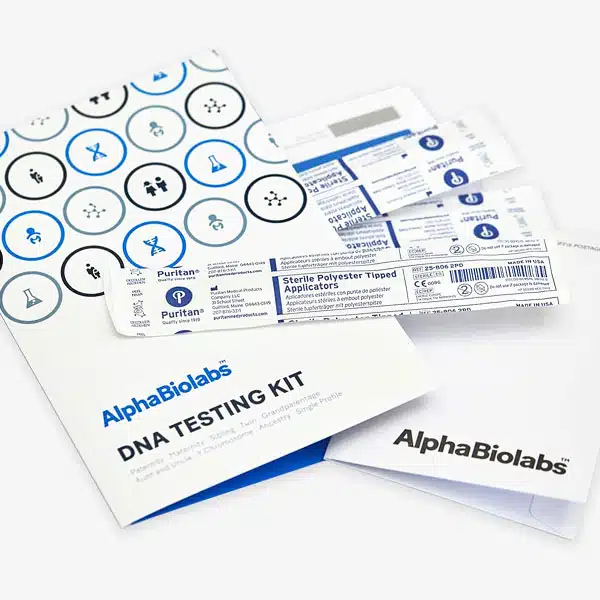
This is where relationship testing becomes particularly useful. AlphaBiolabs provides testing options for relationships including siblings, grandparents, aunts and uncles, and twins, giving families different ways to investigate biological connections.
What Happens If the Father Cannot Be Tested?
This is a surprisingly important question. People sometimes assume that establishing paternity becomes impossible if the alleged father is unavailable for a DNA sample.
Depending on the family members available, other forms of relationship testing may help provide information about biological connections. For example, a grandparent test can examine whether a child is biologically related to the parents of an alleged father. Sibling testing can also assess whether two people are likely to share one or both biological parents.
These tests do not all work in exactly the same way as a standard paternity test, so choosing the appropriate test matters. AlphaBiolabs explains the different family relationship options available, which is helpful when the obvious route is not possible.
DNA Testing Before a Baby Is Born
Some families want answers before birth rather than waiting until after the baby arrives. Prenatal paternity testing can be used during pregnancy to investigate biological paternity.
Modern non-invasive prenatal testing can use a blood sample from the mother alongside a DNA sample from the alleged father. This differs considerably from the invasive procedures people may associate with older prenatal testing methods.
For anyone considering this option, timing and the testing process are worth understanding carefully. AlphaBiolabs offers prenatal paternity testing as part of its family DNA services.
Personal Answers and Legal Proof Are Not the Same Thing
One detail that can easily be overlooked is the reason you need the result.
If you simply want an answer for your own peace of mind, a home DNA test may be appropriate. Samples can typically be collected using cheek swabs, making the process relatively straightforward.
A result needed for an official purpose is different. Legal DNA testing requires controlled sample collection and identity verification so that the chain of custody can be documented. This can matter in situations involving courts, immigration, inheritance, or other formal proceedings.
So before ordering anything, it helps to ask yourself a simple question: do I need to know the answer personally, or do I need to prove it officially?

What DNA Results Cannot Tell You
DNA testing can provide powerful evidence about biological relationships, but it cannot explain the history surrounding them.
A result may establish whether two people share a biological connection, but it cannot tell you why a family situation developed in a certain way, what somebody knew years ago, or how everyone involved will feel about the answer.
That emotional side deserves some thought, particularly when testing could reveal unexpected information. Getting a scientifically clear answer does not necessarily make the conversation that follows easy.
Choosing the Right Test for Your Situation
Before arranging a test, consider exactly which relationship you are trying to establish, who is available to provide samples, and whether the result is for personal or official use.
For a straightforward paternity question, the choice may be simple. For more complicated family circumstances, sibling DNA, grandparent DNA, or another relationship test could make more sense.
The useful thing about services such as AlphaBiolabs is the range of testing routes available for different situations. DNA cannot answer every question a family might have, but when the question is biological, it can replace years of uncertainty with something much more concrete.